


|
Quantity
|
Out of stock
|
||
|
|
|||
|
|
|||
Maria Montessori believed that a child enters the world with a natural desire to understand it—not to memorize facts or repeat after adults, but to truly grasp concepts through their own experience. This is why, in Montessori education, geography doesn't start with textbooks and definitions; it begins with the planet as a whole.
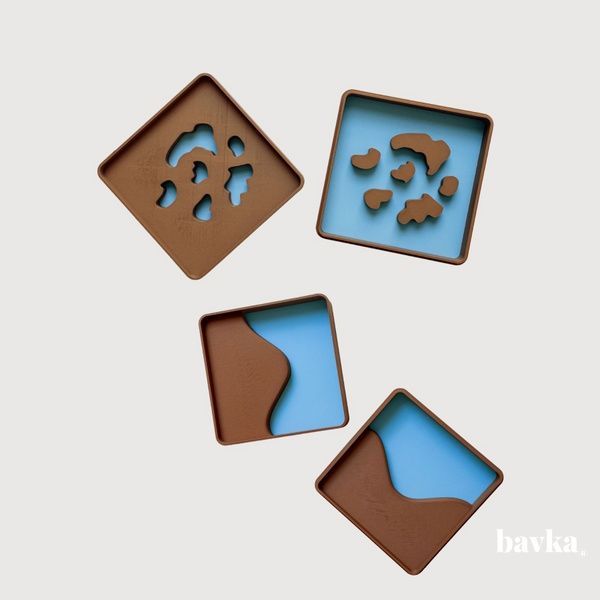
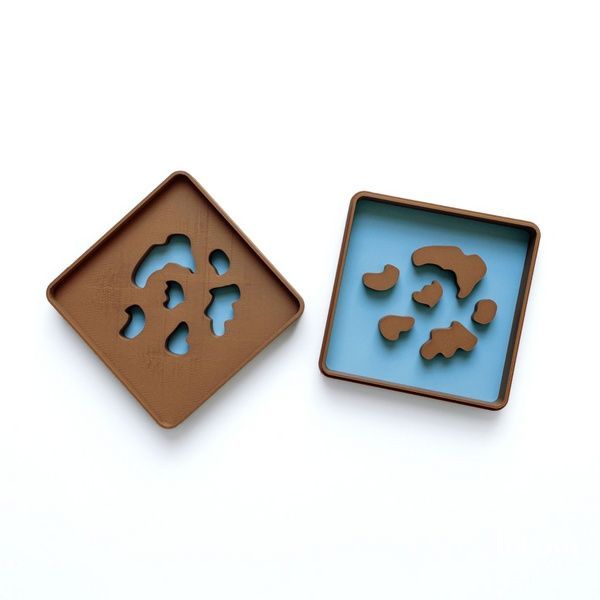
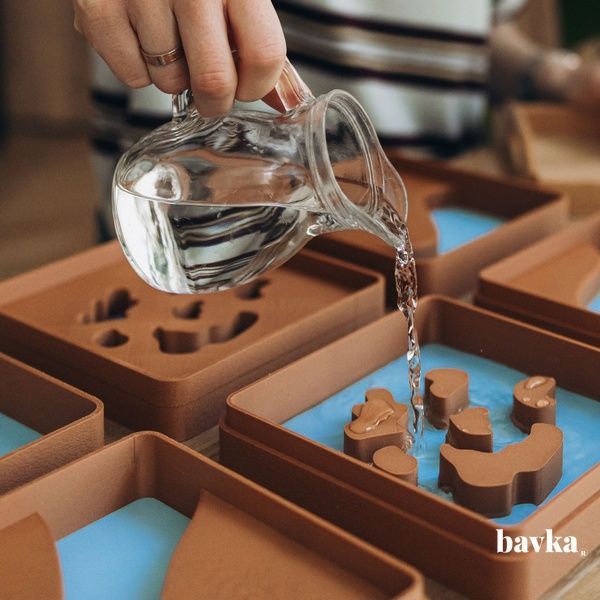
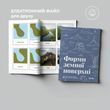
Geographical Forms are a classic Montessori material for children aged 3 and up. They are part of the Cultural area of the 3–6 curriculum, where a child first encounters geography through sensory experience. An island is land surrounded by water; a lake is water surrounded by land. It is the same concept viewed from two sides. When the child pours real water, they see this with their own eyes. This moment cannot be replaced by any card or video because the learning happens not just in the mind, but through the body.
Five Key Geographical Pairs:
-
Island & Lake: An island is land surrounded by water; a lake is water surrounded by land.
-
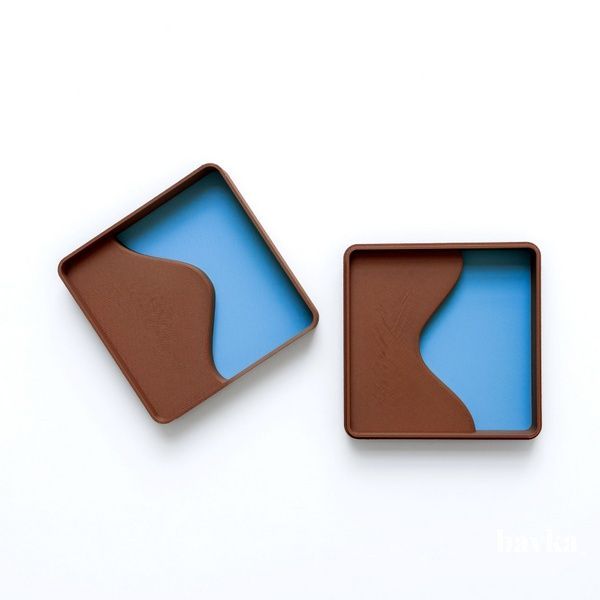
Peninsula & Gulf: A peninsula extends into the water; a gulf recedes into the land.
-
Isthmus & Strait: A narrow strip of land connecting two larger landmasses versus a narrow body of water connecting two larger bodies of water.
-
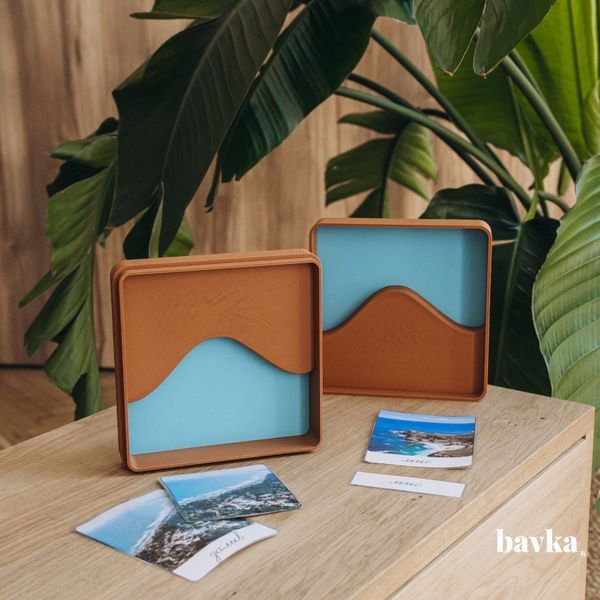
Cape & Bay: A sharp projection of land into the water versus a cozy indentation of water into the land.
-
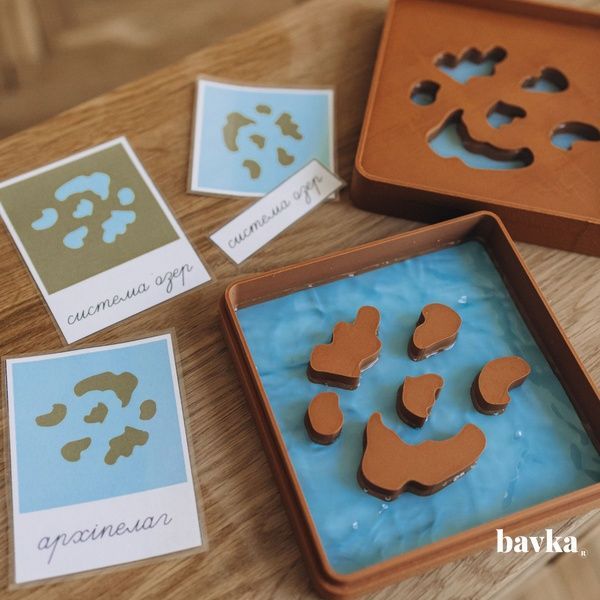
Archipelago & System of Lakes: A group of islands versus a group of lakes.
Choose Your Learning Set:
We have divided the material into blocks for a gradual introduction of concepts, or you can choose the full collection at a better price:
-
Set No. 1: Basic Contrasts (6 forms). Island-Lake, Peninsula-Gulf, Isthmus-Strait.
-
Set No. 2: Complex Landscapes (4 forms). Archipelago-System of Lakes, Cape-Bay.
-
Full Collection (10 forms). A comprehensive collection for complete immersion.
Trays are designed to stack into each other, making them convenient for storage and material rotation in the classroom.
How to Work with the Forms:
-
Concrete Exploration: The child traces the coastline with their fingers, feeling the curves of a cape or a bay.
-
Sensory Experience: Filling the forms with water makes the distinction between land and water interactive and obvious.
-
Language Development: Introducing precise terminology (archipelago, isthmus, strait) through the "Three-Period Lesson."
-
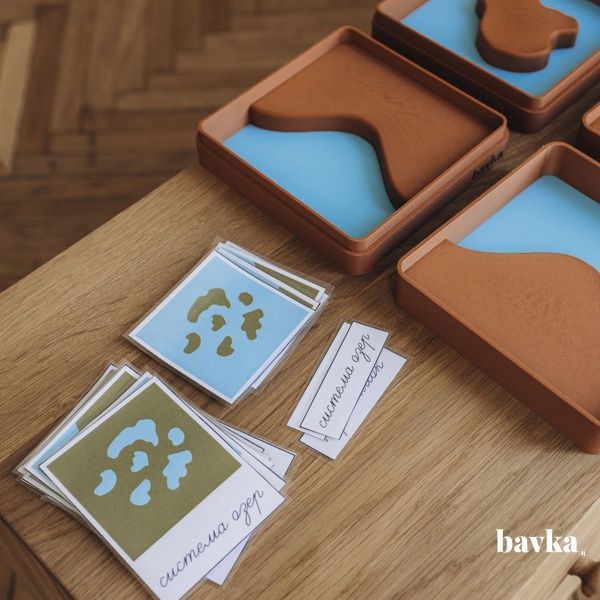
Transition to 2D: Pairing 3D forms with cards and our custom "Land and Water Forms" workbook to identify landscapes on maps.
Montessori and STEAM
In the 3–6 curriculum, these forms are the first introduction to Earth’s geography. In Cosmic Education (6–12), they become the starting point for discussions about terrain, climate, and human settlements. For STEAM learning, this material integrates natural sciences, language (precise terminology), and a research-based approach through personal experience.
Care Instructions
The forms are made of Wood PLA—a biodegradable material based on cornstarch with wood filler. It provides a natural matte texture and a feel similar to real wood. The forms are solid and can be filled with water or soapy solutions. Hand wash only in water not exceeding 45°C. Not suitable for dishwashers or boiling water.
Pair with Our Workbook
The forms are perfectly complemented by our "Land and Water Forms" workbook. The child first explores the material with their hands and then reinforces the knowledge through drawing, labeling, and tasks. Together, they form a complete cycle: from sensory experience to conscious knowledge.