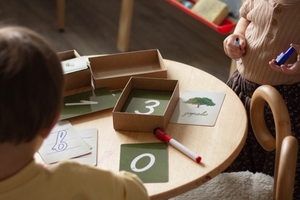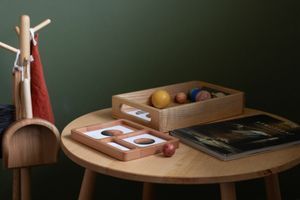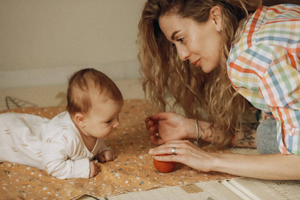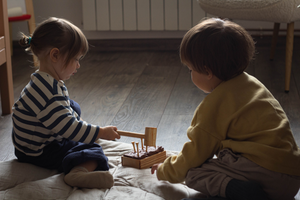
Autumn always sets its own cozy rhythm: the days grow noticeably shorter, evening walks become briefer due to wind and rain, and family life naturally retreats into the warmth of the home. This is the perfect time for our traditional bookshelf rotation. Summer stories of the sea take a well-deserved rest, replaced by books about harvest, falling leaves, and the comfort of home.
While selecting books for this collection, I was once again reminded of how little quality, realistic non-fiction literature we have that genuinely captivates the youngest readers. For instance, much to my regret, I couldn't find a single successful book in Ukrainian about autumn mushrooms.
Due to the scarcity of realistic non-fiction, fiction and fairy tales inevitably dominate children’s shelves. When introducing them to toddlers, it's important to keep their developmental stage in mind: children under 3–4 still find it challenging to distinguish authorial invention from reality on their own. Yet these stories hold immense value: they richly expand vocabulary and serve as fitting allegories for everyday situations, allowing children to gain a safe personal experience through the lens of a character's emotions.
The core rule here is simple: in Montessori, a book never replaces life—it simply helps make sense of it. That is why the real world always precedes fiction on the page. Before reading about woodland chores or autumn winds, a child should experience this season through the senses: crunching through dry leaves, filling their pockets with cold acorns, breathing in damp fog, and tasting warm pumpkin pie. Only with this solid physical experience can children truly delight in artistic imagery, fairy tales, and metaphors without losing touch with reality.
Supporting Those Who Protect the Children’s Word
This autumn, every new book on your shelf is also an act of our solidarity and resilience.
Due to regular, massive shelling, Ukrainian publishing has suffered immense losses:
-
A Russian strike on a logistics center in Kharkiv destroyed millions of copies of books and textbooks—the Ranok publishing house faced the brink of bankruptcy, alongside ruined print runs for Fabula and Zhorzh.
-
A warehouse fire at the #knyholav publishing house incinerated approximately 250,000 copies.
-
Earlier, the Faktor-Druk printing house was struck, where Vivat, Chas Maistriv, and many others were printed.
The enemy's aim is clear: to strip our youngest, most vulnerable children of their culture, language, and access to knowledge.
By updating our children’s bookshelves with titles from affected publishers — Ranok, #knyholav, Zhorzh, Fabula, Vivat, and Chas Maistriv—we help them endure, pay their staff, and print new editions for our children.
Autumn Book Selection by Age
From 3 Months to 2 Years: Tactility, Sounds, and Everyday Life
-
“Zoe's Autumn Day” (Осінній день Зої) — Barbara Reid (Moya Knyzhkova Polytsia)
Toddler Zoe sets out for a walk on a windy autumn day. The wind whisks and twirls leaves around, the little one splashes through puddles, watches dogs and birds, and after the crisp outdoors, returns home to warmth and hugs. Textured plasticine illustrations provide rich tactile and visual anchors in the real world.
-
“Bodo in the Village” (Бодьо в селі) — Marta Galewska-Kustra (Chas Maistriv)
Bodo visits his grandparents in the village with his family. The book introduces picking apples in the orchard, a tractor at work in the fields, farm animals, and seasonal rural routines. Built on onomatopoeia (“woof,” “vroom,” “cluck”), it gently encourages speech development through relatable everyday situations.
.jpg)
-
“How Is Bread Made?” (Як роблять хліб?) (Ranok)
An interactive lift-the-flap encyclopedia that breaks down the process simply and realistically: planting winter wheat in autumn, ripening wheat ears, harvesting with a combine, milling flour, and the baker making bread. An ideal example of practical Montessori material.
-
“The Pumpkin Walks the Garden” (Ходить гарбуз по городу) (Ukrainian Folk Rhyme)
A rhythmic classic introducing the garden's autumn harvest: pumpkin, melons, cucumbers, beets, and beans. Great for learning vegetable names before exploring real produce by touch and taste together in the kitchen.
.jpg)
From 2 to 4 Years: Observation, Changes in Nature, and First Storylines
-
“Autumn Wimmelbook” (Осінній вімельбух) — Rotraut Susanne Berner (Artbooks)
Detailed, wordless town panoramas: residents preparing for the harvest festival, carrying giant pumpkins to the market, fixing the kindergarten roof, walking with lanterns in the evening, and birds migrating south. Promotes attention, enriches active vocabulary, and teaches cause-and-effect relationships.
-
“Autumn” (Осінь) — Núria Roca (Ranok)
Realistic informational non-fiction for toddlers. Explains in accessible language why leaves turn yellow, where insects hide, how animals store food, why people bundle up in warm coats, and what fruits autumn brings. Includes simple conversation starters at the end.
.jpg)
-
“Little Goose's Autumn” (Перша осінь гусеняти) — Ellie Woollard, illus. Briony May Smith (Zhorzh)
A tender, poetic story about growing up and experiencing the cold and unrest of autumn for the first time. The little goose watches a hedgehog prepare to sleep in the leaves, a squirrel stash nuts, and a bear head to its den. Feeling lost, the gosling tries to find a burrow too, until it hears the call of its flock in the sky. A tale of natural instincts, embracing one's true nature, and discovering one's path.
.jpg)
-
“What Does Autumn Taste Like?” (Яка на смак осінь?) — Yana Khomenko (Ranok)
A sensory tale of a little hedgehog experiencing the season through tastes and scents: tart sea buckthorn, the aroma of baked apples, honey, fresh nuts, and damp bark. Teaches children to notice the subtle scents and flavors of the world around them.
-
“What Leaves Dream Of” (Про що мріють листочки) — Khrystyna Lukashchuk, illus. Oksana Drachkovska (Yakaboo Publishing)
A poetic story about the leaves on a tall tree: from green spring buds to golden leaf-fall. It gently explains the life cycle of plants—leaves don't disappear forever; they blanket the earth to warm roots through winter and become nourishment for new spring shoots.
-
“Autumn Poems” (Осінні віршики) — Ivan Andrusiak, Halyna Kyrpa, Tetiana Vinnyk, Andrii Bochko (Ranok)
A collection of cozy Ukrainian poetry about rain boots, clouds, fogs, rustling leaves, and mushrooms. Develops phonemic awareness, rhythm, and a love for language.
.jpg)
-
“The Little Tractor Is Afraid” (Тракторець боїться) — Nathalie Quintart (Chorni Vivtsi)
A little tractor is caught in an autumn thunderstorm, gets stuck in slippery mud, and develops a deep fear of bad weather and the dark. However, when other machines on the farm need help, he finds the courage to venture out with the support of his friends. A story that normalizes fear and shows that being scared is natural.
-
“A Helpful Gift for Philippa Pheasant” (Корисний подарунок для Філіппи Фазан) — Briony May Smith (Ranok)
Philippa is a clever bird living near a busy country road separating the forest from berry patches. Forest animals struggle to cross the road safely. After spotting a school crossing guard, Philippa receives a bright reflective vest and a “Stop” sign, becoming a caring traffic warden for the animals. A book about road safety, resourcefulness, and caring for others.
-
“A Year in the Forest” (Рік у лісі) — Emilia Dziubak (Old Lion Publishing)
Autumn spreads offer a realistic view of how forest inhabitants prepare for hibernation and gather winter stores.
.jpg)
From 4 to 6 Years: Emotions, Cozy Moments, and Relationships
-
“Bison Looks for a Nest” (Зубр шукає гніздо) — Oksana Bula (Old Lion Publishing)
After seeing the Tukoni tuck bears into bed and birds fly away, the bison decides he wants to spend the winter in warmth too, and sets out to find a suitable nest. With gentle humor, the book explains zoological facts: why some animals hibernate, while large ungulates with thick winter coats remain active through the snow.
-
“Manuel & Didi: Autumn Stories” (Мануель і Діді. Осінні історії) — Erwin Moser (Old Lion Publishing)
A series of miniature tales about two inventive mice. In autumn, they craft a snug home inside a found pumpkin, use mushroom caps as umbrellas against the rain, gather nuts, and warm up by the stove. The gold standard of peaceful bedtime reading.
-
“When Pettson Was Sad” (Коли Петсон сумує) — Sven Nordqvist (Bohdan)
In late autumn, when it's gray and damp outside, old Pettson feels down and drained—he doesn't want to chop wood, build things, or talk. Findus the cat patiently and gently coaxes him down to the lake for fishing, where nature gradually restores the old man's peace of mind. A profound story showing that sadness is normal, and silent support can heal.
.jpg)
-
“Brambly Hedge: Autumn Story” (Ожиновий живопліт. Книга 3. Осіння історія) — Jill Barklem (Chytarium)
A British children's classic renowned for intricate botanical detail. The mouse community rushes to fill underground pantries with berries, nuts, and mushrooms before autumn storms roll in. Little Primrose gets lost in tall grass in the mist but finds shelter with a neighbor. Teaches mindfulness and highlights community mutual aid.
-
“Hvilko” (Хвилько) — Ciara Gavin (Murkit)
A tender therapeutic tale about overcoming childhood anxiety and inner doubts in a big, confusing world. It shows little ones how to navigate worry through unconditional acceptance, patience, and the warmth of loved ones.
.jpg)
-
“Vitrulya, the Little Oakling” (Вітруля, дубовичка невеличка) — Lucy Fleming (Ranok)
Vitrulya is a tiny fairy oakling who grew up on her beloved tree alongside her mother and father. As autumn arrives, it is time for change: she must summon the courage to leave her snug home and find a new shelter for the winter. A sensitive therapeutic story about the fear of the unknown, early steps toward independence, and finding the courage to move forward when everything around you changes. Falling autumn leaves become a natural metaphor for growing up.
-
“Margaret's Unicorn” (Маргарет і єдиноріжко) — Briony May Smith (Zhorzh)
Margaret moves with her parents to a remote mountain cottage in late autumn. Feeling lonely, she discovers a lost baby unicorn in the autumn heather. The girl cares for the little creature throughout autumn and winter, and when spring arrives, finds the strength to release it back to its herd. A story of adjusting to a new environment, empathy, and letting go with love.
.jpg)
From 6 to 8 Years: Independent Reading, Traditions, and Meaningful Themes
-
“Autumn on Elderberry Street” (Осінь на Бузиновій вулиці) — Martina Baumbach (Shkola Publishing House)
A cozy chapter book about a group of neighborhood friends. In autumn, they bake plum pie, fly homemade kites on windy afternoons, make lanterns, build outdoor shelters, and rescue a hedgehog preparing for winter. Pure screen-free childhood reading for primary schoolers.
-
“Bread That Brings Celebration” (Хліб, що дарує свято) — Katya Sil (Moya Knyzhkova Polytsia)
An ethnographically rich and visually delightful exploration of Ukrainian bread-making traditions. Introduces ceremonial breads (korovai, kalach, knysh, kalyta), our ancestors' deep reverence for the soil and harvest, and the connection between generations.
.jpg)
-
“Tuli-Tuli: The Animal Guardian Tells Stories About Them” (Тулі-тулі) — Zofia Stanecka (Chas Maistriv)
Though narrated by an unseen guardian spirit named Tuli-Tuli, this book is solid popular science zoology. Filled with diagrams, maps, and real facts about how wild animals and birds prepare for the cold: growing thicker coats, hibernating, and migrating.
-
“Tell Me a Tale About the War” (Розкажи мені казку про війну) — Hryhoriy Falkovych (Ranok)
A gentle, honest, and luminous poetry collection for family reading. The author finds the right, non-traumatizing tone to talk with children about air-raid sirens, displacement, the courage of defenders, and unwavering hope in our home. Helps children voice their feelings and regain a sense of safety and light.
-
“Trees” (Дерева) — Piotr Socha (Chas Maistriv)
A grand-scale, illustrated non-fiction volume explaining the science of foliage color changes, water transport, and how trees enter winter dormancy.
.jpg)
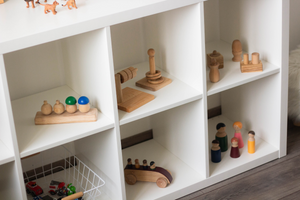
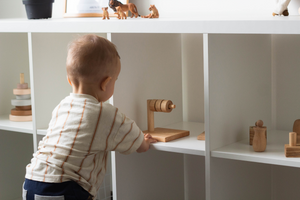
Place these books cover-facing on low, open shelves so your child can select them independently. Read together, turn on warm evening lamps, and support those keeping the Ukrainian word alive for our children.