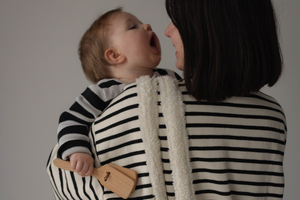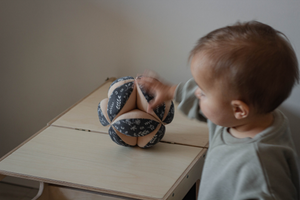
Preterm birth is an experience that changes everything.
It arrives suddenly — without preparation, without a script.
And almost always with fear, countless questions, and uncertainty.
This conversation is for parents who are preparing for the birth of a child.
For those whose baby is already in a neonatal unit.
And for everyone who wants to understand why babies born prematurely need special care and support.
We spoke with Yuliia Honcharova — a neonatologist, co-owner of the Friendlyk clinic, and a specialist with many years of experience caring for the smallest patients.

“I became deeply attached to these babies”
— What brought you to neonatology?
“I trained as a pediatric anesthesiologist and began working in a pediatric intensive care unit in 2007.
It was a period of rapid development in neonatal intensive care — Ukraine was preparing to join global practices of caring for babies born from 26 weeks of gestation, weighing as little as 500 grams. At that time, it seemed almost unbelievable.It was very difficult, but incredibly fascinating. Everything was developing quickly, new approaches were constantly emerging — and for a young specialist, it was extremely exciting. I gladly immersed myself in this field.
At the beginning, intensive care units were not yet divided — there were no separate neonatal departments caring only for premature or critically ill babies. But the more I worked with them, the more emotionally attached I became. They were so small, so fragile… And when, after several months, they survived and gained weight — it felt like a real miracle.”
From individual practice to responsibility for an entire system
“I became deeply involved in this work, and over time, results began to appear. The administration noticed this and предложила me to lead a separate intensive neonatal care unit.
That is an entirely different level of responsibility — you are now responsible for the entire system, for the work of the whole team, and for the collective outcome.
That’s how I became ‘rooted’ in this field and continued working.”

“I still remember how many times his heart stopped”
— Are there stories that stay with you forever?
“There are, of course, many stories from those years. The ones that stay with you the most are the smallest and most critically ill babies. Unfortunately, after I left Poltava, I no longer know how their lives unfolded — and that makes me very sad.
Most of all, I wish I knew what happened to the tiniest boy I cared for literally from the very beginning. He was born weighing 530 grams and dropped to 470. He was admitted to us on his fifth day of life — we cared for him, followed him up later. But honestly, I don’t even remember his name anymore.
These children remain in our memory in some ways, and in others they fade. But I still remember how many times his heart stopped — all of those critical moments…
There are so many stories like this. Countless. Sometimes, once you start remembering and talking, it’s impossible to stop.”
“These are not just lives saved”
— What gives you the strength to keep going?
“Every successful story of survival is inspiring. I always remember that so, so many lives have been saved. And these are not just lives saved — these are children who today live full, meaningful, and high-quality lives.
I still stay in touch with many families. The children we once cared for are now teenagers — 15 or 16 years old. They live their beautiful lives.
And of course, this continues to inspire me — not to give up, to keep moving forward, and to keep working.”

“These children need much more”
“And of course, this still inspires me today — not to lower my hands, but to keep going.
Because unfortunately, these children need far more than typical children. And in our current conditions — economically difficult, emotionally challenging — this is very hard.
But something must be done for them. We must fight for them, advocate for them, and sometimes strive for what seems impossible.”
Who are premature babies?
“The group of premature babies is very diverse. In our country, babies born prematurely are those born from 25 weeks of gestation, weighing from 500 grams and above. This is, of course, the most critical group.
Babies born weighing under 750 grams are the most severe category. Their mortality rate is very high — 50% or more. Thankfully, there are very few of them, but they are the most difficult to care for.
The next group includes babies weighing over 750 grams. Care is somewhat easier, though still very challenging. Mortality is around 40%, and they require the greatest medical resources. However, over the past 10 years, survival rates for this group have increased significantly, and they are absolutely worth fighting for.
Next are babies weighing from 1 to 1.5 kilograms. This is not the largest group, but it is the one requiring the most medical interventions. At the same time, it is the group most likely to have positive outcomes — survival rates reach 80–90%. Mortality is much lower, around 15–20%. These babies require comprehensive medical care, but they truly have every chance for a full life.
The largest group — about 80% of all premature babies — are those born after 34 weeks of gestation. These are the so-called late preterm infants. At first glance, they may seem like the easiest group — and in many ways, they are. But they still require attention. Their outcomes are the best, as the volume of medical care needed is significantly smaller.”

What does a baby’s journey in the hospital look like?
“The smaller the baby, the greater the level of care required. All babies born weighing less than 1.5 kilograms are immediately transferred to intensive care units, where they may be connected to mechanical ventilation. The lungs are most often the weakest organ.
Ventilation can be either full mechanical ventilation or non-invasive support that helps the baby breathe more easily, supports lung volumes, but does not fully breathe for them.
Naturally, the baby cannot consume the required volume of nutrition and fluids, so partial or full parenteral nutrition is provided — amino acids, glucose, and fats are administered intravenously.
The most common causes of preterm birth are intrauterine infection or placental abruption.
Stress also plays a major role. During the full-scale war in Ukraine, the number of preterm births has increased, clearly linked to the chronic stress that women are living under. And this, of course, does not contribute to health.
The more medical interventions are required, the longer the baby stays in intensive care. Once the baby breathes independently, can tolerate larger volumes of feeding, and maintain body temperature, they are transferred to a post-intensive care unit, where they can stay with their mother.
When the baby can eat independently, breathe independently, and maintain temperature without difficulty, they are discharged home.
Very often, this happens close to the originally estimated due date — plus or minus one week.”

About resources — and a mother nearby
“All progress in neonatology is tied to advances in medical equipment. First and foremost — respiratory support equipment: mechanical ventilators, non-invasive ventilation systems, and monitoring devices such as vital signs monitors, oxygen saturation monitors, heart rate monitors, capnographs, and blood pressure monitors.
Pharmaceuticals also play a critical role. These babies often require very expensive medications: parenteral nutrition components, antibiotics, and surfactant — a substance that helps the lungs open and remain open. High-quality antibiotics are especially important.
Quality disposable materials are equally essential. A baby weighing under 1.5 kilograms may remain in intensive care for weeks or even months. This is extremely resource-intensive. Such care is very costly.
It is good that neonatology and intensive care are funded in various ways today, so the burden does not fall entirely on parents — otherwise, the costs would be overwhelming. Still, given today’s economic reality, I am sure that in different regions and clinics, families do incur significant expenses.
The earlier a baby can be with their mother, the better it is for the child. But for the mother, this is often physically and emotionally very difficult.”

Why support matters
This text is not meant to frighten, but to bring understanding — and to remind us that any form of support matters for families going through this experience.
That is why we speak about the “Early Bird” initiative — as a small but warm gesture that can become a source of support at a moment when it is deeply needed.