Author: Alina Khoma
CEO of bavka, Montessori educator
When choosing an educational approach for your child, it's easy to feel overwhelmed by the amount of information available. Montessori, Waldorf, traditional schools... Even educational institutions that combine several methodologies have emerged. Today, we'll thoroughly examine the two most popular alternative methods and understand whether they're truly similar or if there are fundamental differences between them.
How It All Began
Maria Montessori began her work in 1907 in Rome. This female doctor challenged the entire educational system when she opened the first "Casa dei Bambini" (Children's House) for children from poor families. Instead of traditional teaching, she observed children and discovered something amazing - children are capable of learning independently if you create the right environment.

Rudolf Steiner founded the first Waldorf school in 1919 in Stuttgart. Interestingly, the school was created for the children of workers at the "Waldorf-Astoria" tobacco factory, hence the method's name. Steiner was a philosopher who believed that education should develop not only the mind but also the soul and spirit of the child.

Both approaches emerged almost simultaneously but from completely different needs of their time. Montessori responded to the challenges of industrialization, while Steiner addressed the spiritual crisis following World War I.
Who Attended These Schools
When you doubt a method's effectiveness, it's worth looking at the results. Montessori school graduates are impressive - Jeff Bezos (Amazon founder), Sergey Brin and Larry Page (Google co-founders), Nobel Prize winner Gabriel García Márquez, and Jacqueline Kennedy. Waldorf schools have also educated many famous people - Jennifer Aniston, Sandra Bullock, and Kenneth Chenault (former CEO of American Express).
Interestingly, many employees of the world's largest technology companies - Google, Apple, Meta, Microsoft - today choose these alternative schools for their children. Paradoxically, people who create digital technologies often want their children to learn without gadgets. In Silicon Valley, Waldorf schools are particularly popular among IT specialists - they understand the importance of developing creativity and critical thinking, not just technical skills.
This isn't coincidental - both methods develop creativity, independence, and non-standard thinking, which is so valued in today's world.
Numbers That Speak for Themselves
Today, over 20,000 Montessori schools operate worldwide in 110 countries. There are fewer Waldorf schools - about 1,200 in 75 countries, but they have very dedicated followers.
In Ukraine, the situation is also telling - the Montessori approach is more popular, especially in private kindergartens, with over a hundred already established. There are fewer Waldorf schools, about fifteen, but they form true communities of like-minded individuals.
The Waldorf Triangle - Foundation of Everything
When you first see the Waldorf triangle diagram, much becomes clear. Steiner believed that children develop through three centers - thinking, feeling, and willing.
Thinking develops gradually, starting with concrete concepts and only transitioning to abstract thinking at an older age. This is why Waldorf doesn't teach reading until age seven - allowing the brain to mature.
Feeling is the heart of the entire approach. Aesthetics, music, fairy tales, and art must first touch the child's soul. Children should feel the beauty of the world before analyzing it.
Will manifests through actions, movements, and handwork. Children in Waldorf schools move a lot, create things with their hands, and play active games.
The arrows between these centers show constant interconnection - movement evokes emotions, emotions generate thoughts, and thoughts inspire new actions. This is a continuous cycle of development.
Seven Principles of Waldorf vs Montessori's Scientific Approach
Waldorf pedagogy stands on seven principles that differ radically from both traditional approaches and the Montessori method.
The image of the human being here is special - a child is not just a physical body but a complex being with soul and spirit. In contrast, Montessori relies on scientific observations of children, without delving into spiritual concepts, focusing on what can be seen and measured.

Child development phases in Waldorf are divided into the famous seven-year periods - from birth to seven, seven to fourteen, fourteen to twenty-one. Montessori instead identifies sensitive periods - short time frames when children are particularly receptive to learning certain skills. For example, the sensitive period for language lasts from birth to six years, for order from two to four years, for movement from one and a half to four years. This is a more flexible approach that allows "catching the moment" for learning.
The developmental curriculum in Waldorf is built on the principle that learning follows development. First play, then imitation, then art, and only finally intellectual activity. Montessori also follows natural development but offers structured materials with self-correction that allow children to learn independently whenever they're ready.
Freedom in learning means in Waldorf that teachers have creative freedom to adapt the program to specific children. In Montessori, freedom lies in children choosing what to work with, how much time to spend on activities, and when to stop. These are fundamentally different types of freedom - adult creative freedom versus child choice freedom.
What Unites Both Approaches
Despite fundamental differences, both methods share common features that distinguish them from other educational approaches.
Both place the child at the center of the learning process. Both Montessori and Waldorf recognize children as active participants in their own development, not passive recipients of knowledge. They respect natural developmental rhythms and don't try to accelerate processes that should occur gradually.

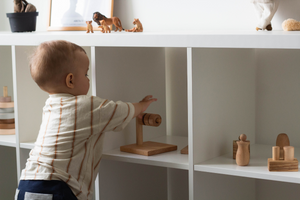
Environment as the "third teacher" is another shared feature. Both approaches carefully consider the space where children spend time, though they do it differently. Montessori creates a structured environment with clear zones, while Waldorf creates a warm, home-like atmosphere with natural materials.
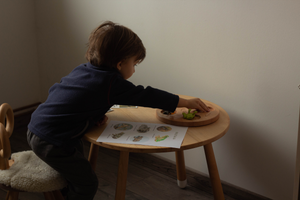
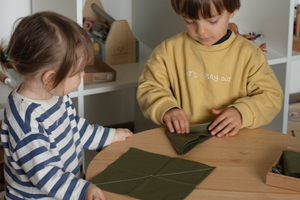
Practical activity is valued in both methods. Children cook, clean, care for plants, and work with their hands. This develops not only motor skills but also responsibility and independence.
Technology limitations are also characteristic of both approaches, though to different degrees. Both Montessori and Waldorf believe that in early years, live communication and interaction with natural materials are more important than screen time.
Key Differences in Detail
The timing of introducing academic skills demonstrates the biggest difference between approaches. In Montessori, children can begin reading at three to four years old if they show interest and readiness. The sensitive period for language begins at birth, and the method uses this natural inclination. Waldorf, conversely, believes that formal reading instruction before age seven can harm the development of imagination and symbolic thinking.
Attitudes toward fantasy and reality are radically different. Montessori insists that children should first understand the real world before moving to fantasies. Therefore, fairy tales and fictional stories are introduced later. Waldorf, on the contrary, considers fantasy the foundation of healthy development and actively uses fairy tales, myths, and symbolic teaching from early age.
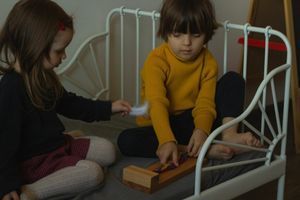
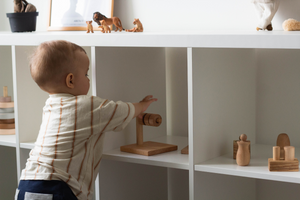
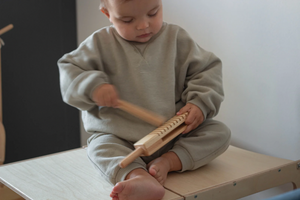
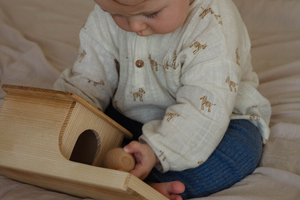
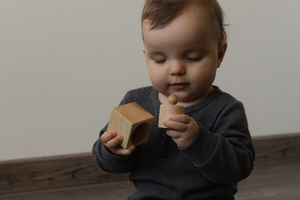
Materials and toys reflect these philosophical differences. Montessori offers realistic, functional materials with self-correction - pink tower, brown stairs, golden beads for mathematics. Each material isolates one property and has a clear purpose.


Waldorf prefers simple, "imperfect" toys made from natural materials that children can fill with their own content and imagination.

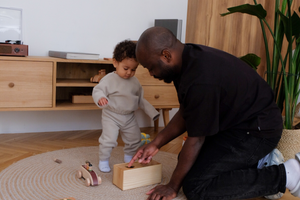
The adult's role is also fundamentally different. Montessori teachers prepare the environment, present materials, and step back, giving children the opportunity to concentrate and work independently. The principle "help me do it myself" is the foundation of interaction. Waldorf educators are actively present in children's lives, creating rhythms, telling stories, singing, becoming examples to follow and sources of inspiration.

Can Both Methods Be Combined?
Theoretically yes, but practically very difficult because the philosophies are radically different.
However, elements can and should be combined. You can use Montessori principles in practical life - when children cook, clean, and care for themselves independently. Simultaneously apply Waldorf rhythms and traditions - weekly baking, seasonal celebrations, lots of time in nature.
Many modern private schools try to take the best from both methods, creating hybrid approaches. The main thing is not to lose the essence of each method in attempts to mix them.
Reflecting on the Choice
Both methods offer alternatives to traditional education, but each in their own way. Montessori develops independence, concentration, and love of learning through structured environments and freedom of choice. Waldorf preserves childhood, develops imagination and emotional intelligence through art, rhythms, and symbolic teaching.
The choice between them often depends not so much on the child's character as on family values and vision of the future. Some families value early academic development and independence, others prefer preserving childhood and creative development.
It's important to understand that neither method is a universal solution. Each child is unique, and what works for one may not work for another. Sometimes even children in the same family develop better in different educational environments.
The most important thing in any choice is family love, attention, and support. The educational method is just a tool, and the heart of education always lies in relationships between children and the adults who surround them.
What I can say for certain - both approaches will be a real gift for children compared to traditional schools, because they provide what is so lacking - respect, freedom, and joy in discovering the world.