Author: Alina Khoma
CEO of bavka, Montessori educator
Today, the market offers countless variations of busy toys: cubes, boards, tablets, books, or even entire playhouses. In recent years, they have become so popular that it seems no family cafe or pediatric waiting room can do without them.
And it works. Children are genuinely engaged, which is a relief for parents because it is definitely better than trying to soothe an anxious child in an unfamiliar place. As a result, many parents decide to buy this marvel for their home, remembering how deeply intrigued their child was.
.png)
This raises a crucial question: Are busy boards actually beneficial for toddlers?
The short answer is yes and no.
The Pros: When They Work
In specific situations, a busy board can be a fantastic tool to engage a child in meaningful activity. They are especially useful on long road trips or while waiting at a restaurant. They do promote fine motor skills, which can help a child start to master independent play.
.png)
The Cons: Why They Fall Short at Home
On the other hand, busy boards—as the name implies—can be incredibly overwhelming. While we want children to be occupied with useful activities, it is crucial to consider how we organize that experience.
-
Sensory Overload & Fragmented Focus: Some busy boards contain so many elements that it becomes difficult for a child to focus on a single action. This prevents them from sustaining deep concentration. It is vital to nurture concentration through play so that we don’t encounter a school-aged child who struggles to focus on the learning process later on.
-
The Lack of Real-World Logic: A major downside is the illogical design of many components. We often see electrical outlets that plug into nothing (confusing the child’s real-world understanding of safety and function) or switches that don’t turn on any lights. This deprives the child of a logical consequence or a clear, completed result to show for their efforts—unlike a puzzle or a creative craft. They mimic real life but fail to deliver actual life skills.
-
No Isolation of Difficulty: A core Montessori principle is isolating a single challenge. With a packed busy board, we cannot precisely offer a child only the activity that provides a manageable, age-appropriate challenge for their specific developmental stage, nor can we easily remove elements that are uninteresting or unhelpful.
.png)
The "Screen Time" Effect
In waiting areas, restaurants, or on planes, a busy board acts on a child's nervous system much like a cartoon. Because the child receives a massive influx of diverse sensory stimuli all at once, they instantly "zone in" or "lock eyes" on the object. Finally, they have access to all those forbidden "adult" things!
The Takeaway for Home Play: At home, a busy board cannot replace the real-world activities a child needs to gradually master their environment. It cannot substitute foundational toys like basic sorters, building blocks, or puzzles. It is not an all-in-one solution. In fact, interest in a home busy board usually fades very quickly, leaving parents with a heavily mounted piece of wall decor that just collects dust.
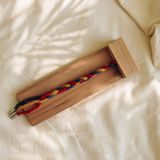
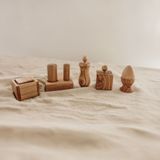
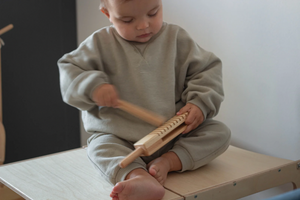
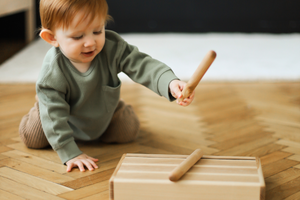
If you love the concept of busy toys but want to choose an option that respects your child's development, some specific designs handle this beautifully. Below is my personal selection of successful, educator-approved solutions:
.png)
.png)
.png)
.png)
.png)
.png)
Additional Materials: