Author: Alina Khoma
CEO of bavka, Montessori educator
The transition from the first year of life to the second and third is a remarkable time when a toddler transforms from an "unconscious creator" into a "conscious worker." While up to 12 months a child mostly absorbed the world around them passively, now their main driving force is action guided by their own will. The toddler has already mastered or is about to fully master walking upright, freeing their hands for work, while their brain builds thousands of new neural connections every second through movement and finger work.
At this age, parents often face new challenges: a lack of sustained concentration, the crisis of independence ("I can do it myself!"), and intense emotional outbursts. Drawing on the Montessori approach and modern evidence-based neurodevelopment, we will break down the three key stages of this period to provide you with a clear, reliable foundation for every day.
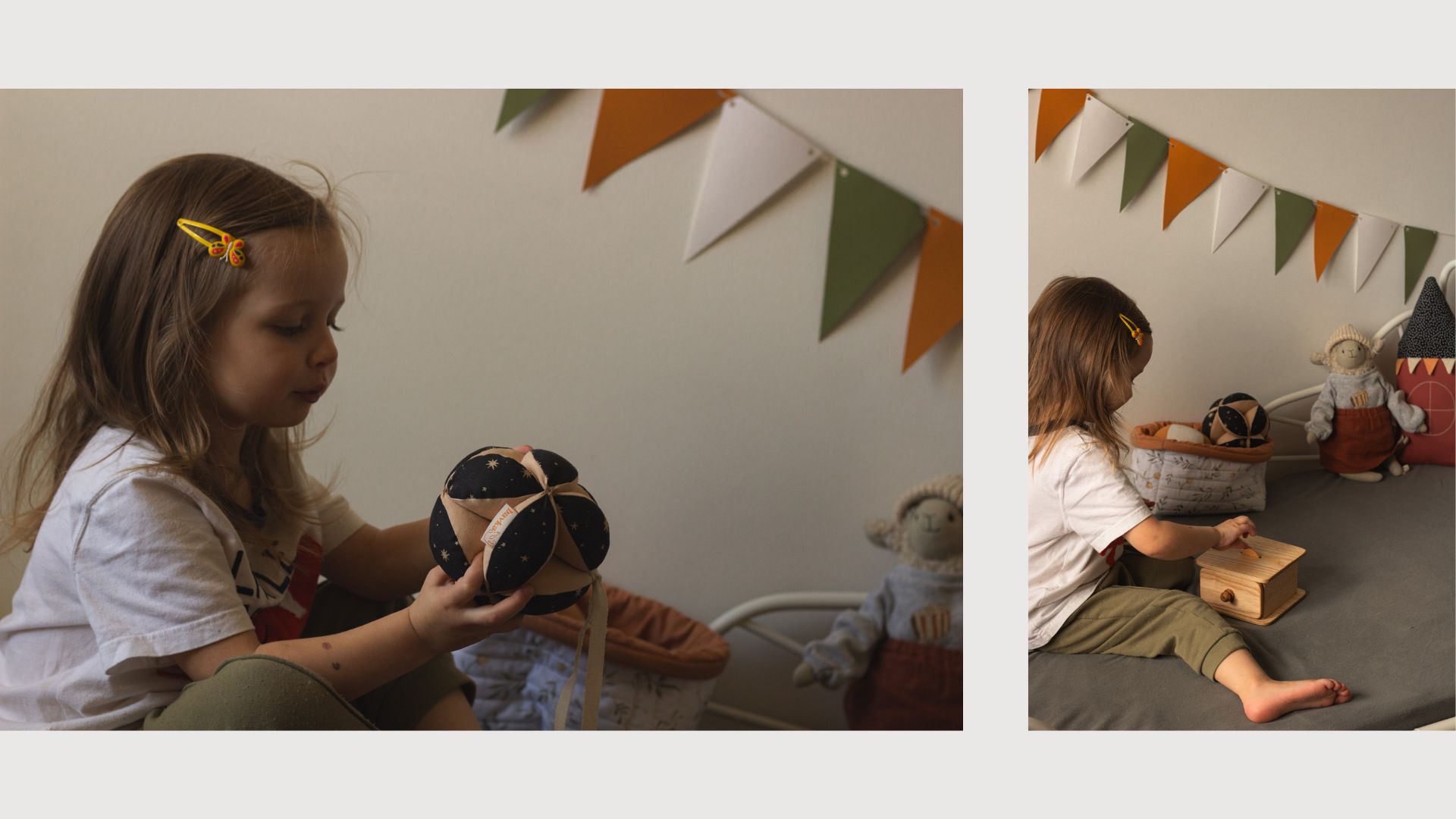
Stage 1: From 12 to 18 Months — Maximum Effort and First Autonomy
During this period, the child experiences a true explosion in gross motor skills. As soon as the toddler begins to stand confidently on two feet, the nature of their interaction with space changes completely: their legs now serve for movement and balance, while their hands become the primary tools of intelligence.
What is happening with the child:
-
The drive for maximum effort: The toddler feels a natural need to test their body's capabilities. They are no longer interested in simply holding a light rattle; instead, they long to carry large, heavy objects, push boxes, and roll big balls.
-
Evolution of the grip: The child's palm gradually transitions from a crude palmar grasp of objects to a more refined finger and pincer grasp, which serves as indirect preparation for precise actions.
-
The need for visual tracking: The child actively explores spatial relationships and the three-dimensionality of the world.
Home finds and materials:
-
Heavy objects for carrying: Small but weighty items for a toddler (e.g., a closed bottle of water, a small bag of grains, or a small stool they can move).
-
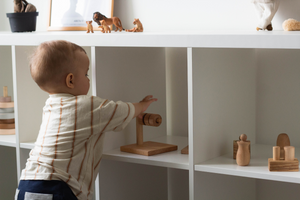
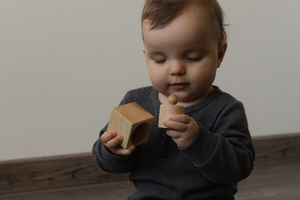
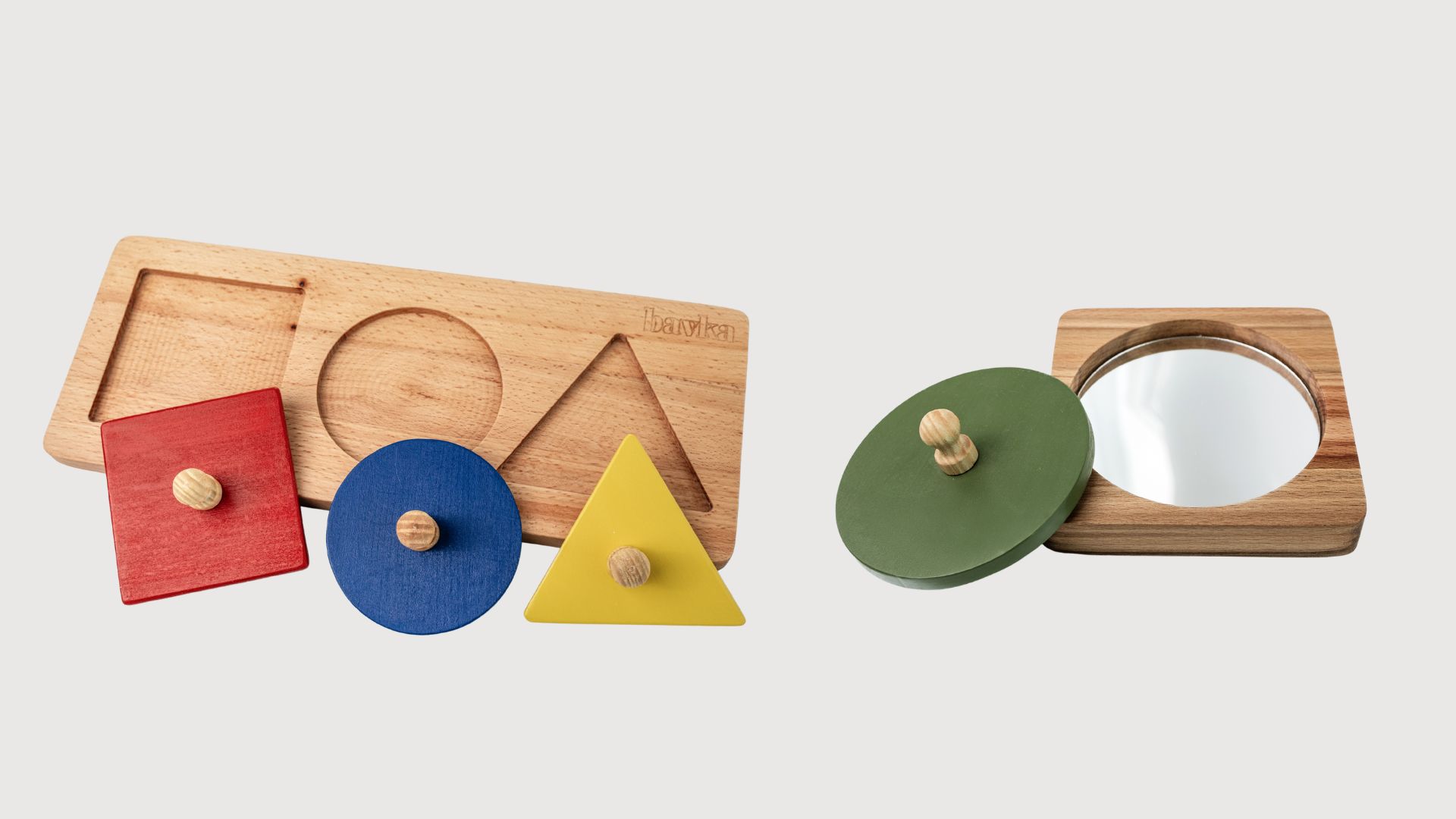
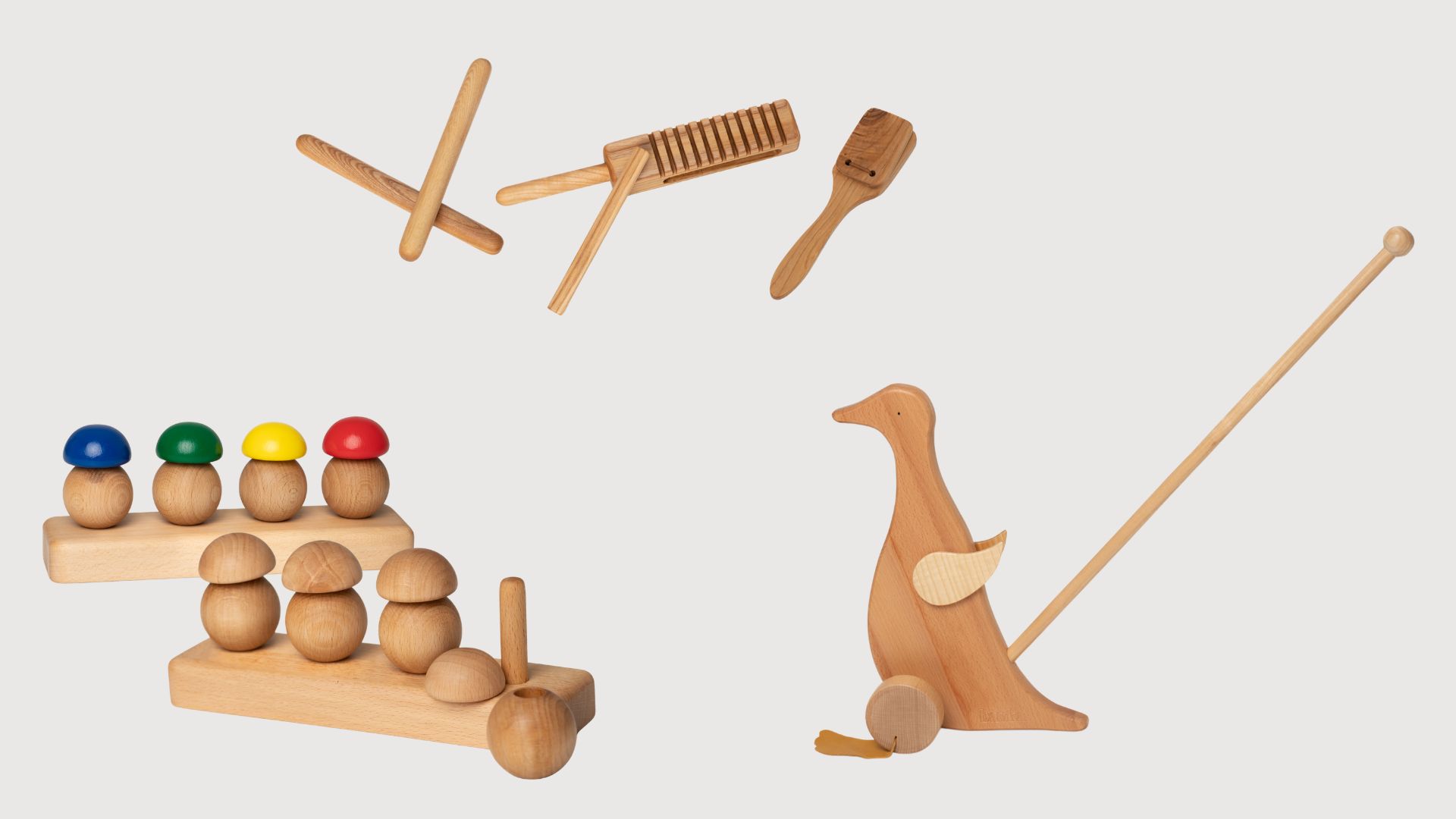
Simple wooden peg puzzles: Single-shape puzzles (a large circle, square, or triangle) where the peg encourages the child to use the exact fingers they will later need to hold a pencil.
-
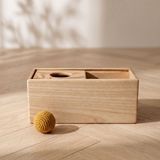
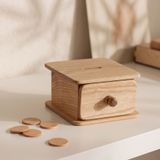
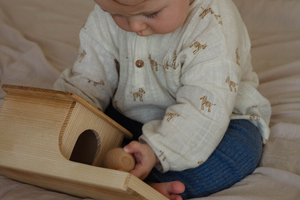
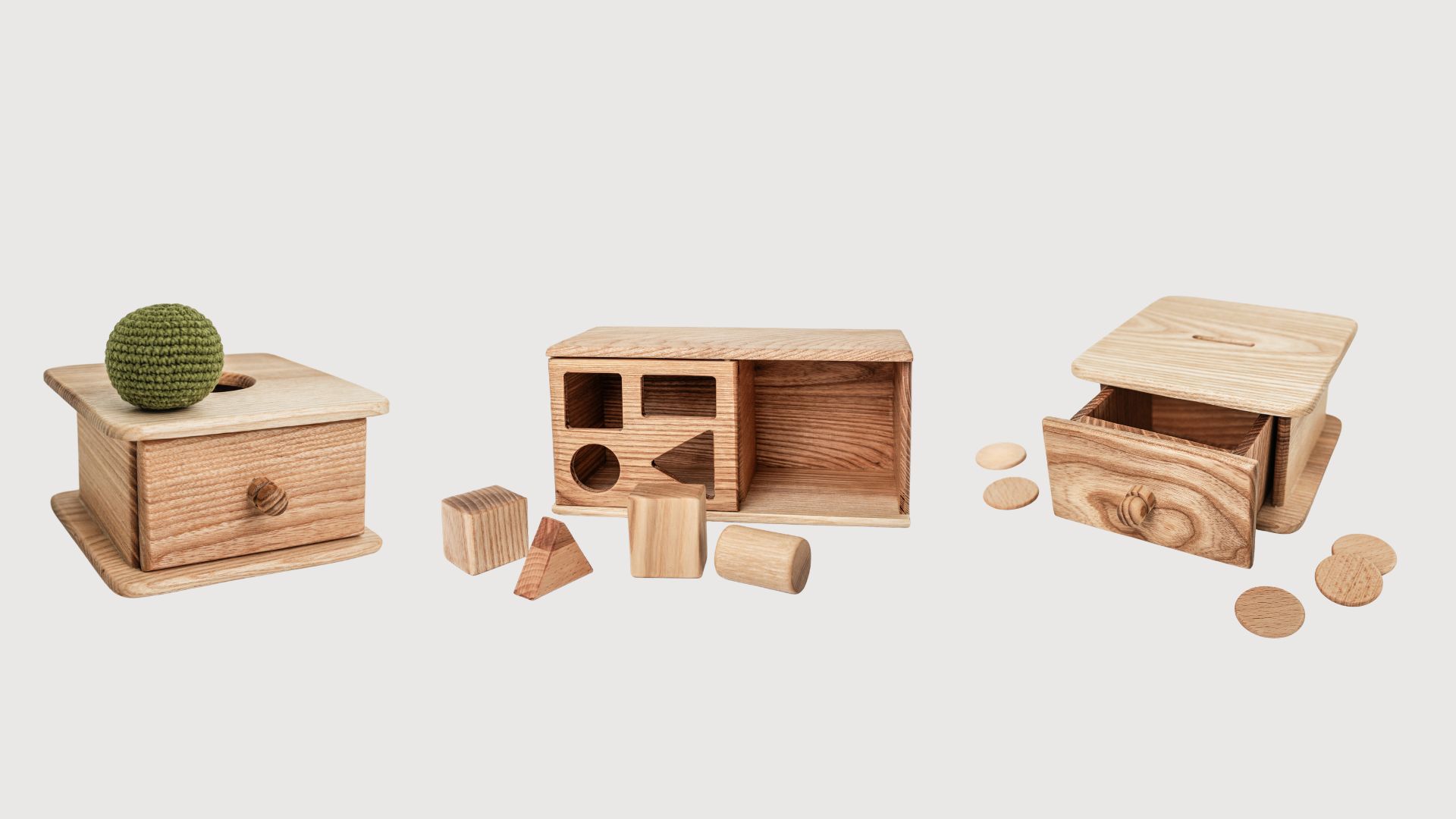
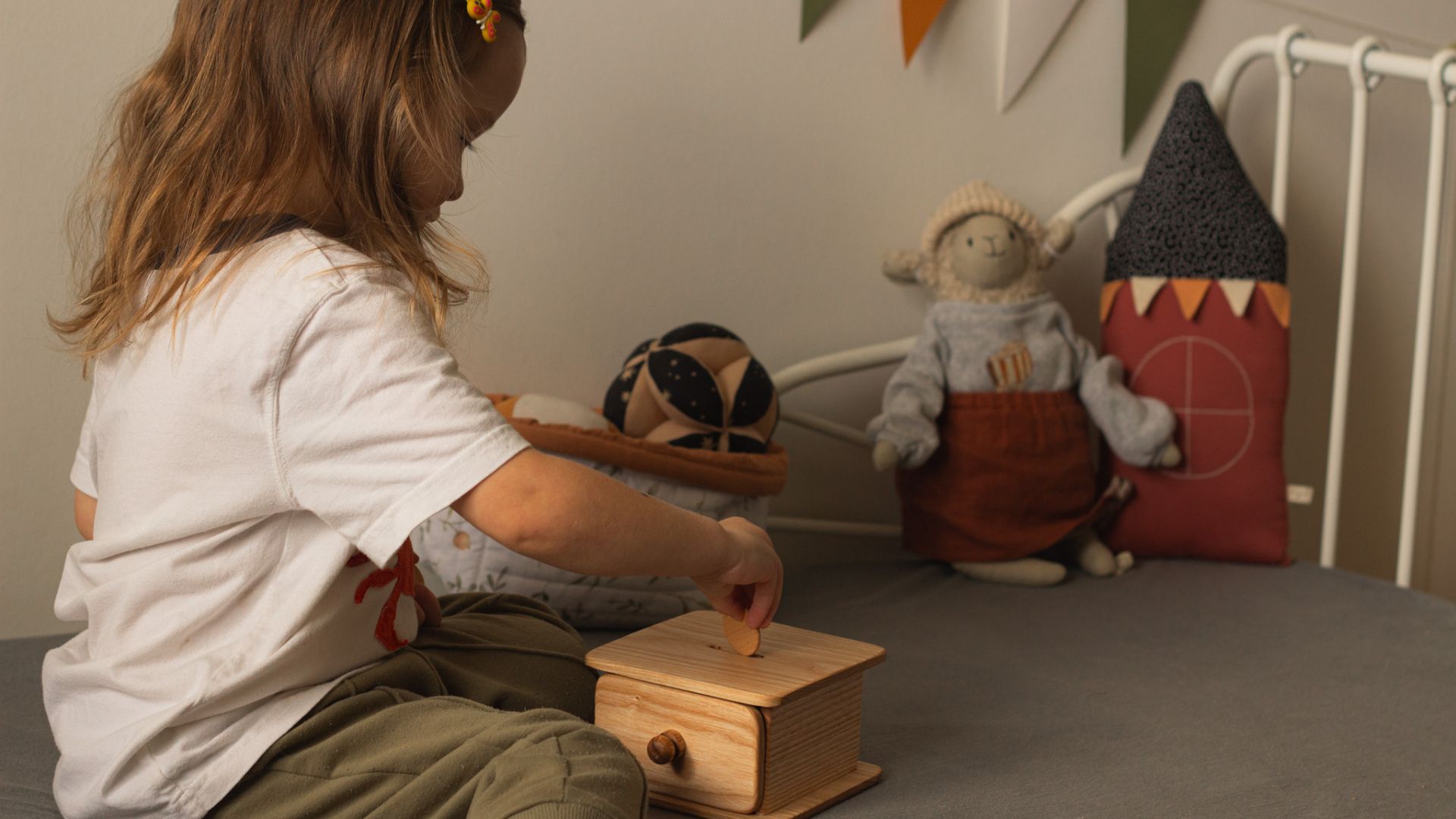
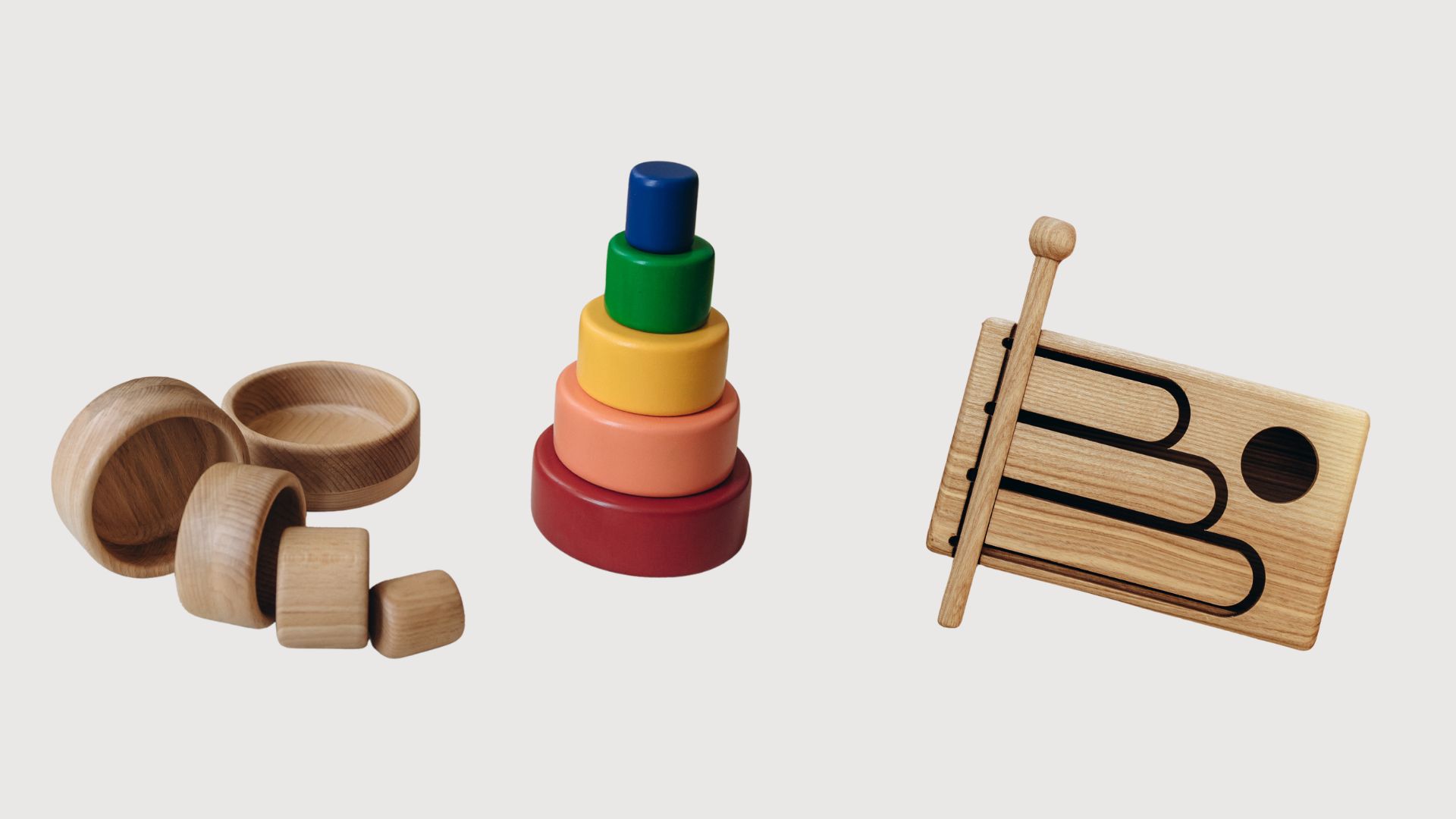
Object permanence boxes and simple shape sorters: Materials where a ball or a geometric shape disappears into a hole and rolls back out. This helps the child realize that even if an object is out of sight, it hasn't vanished forever.
Action step for home:
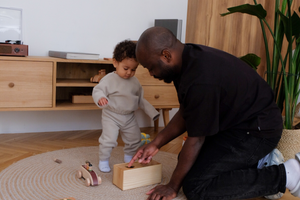
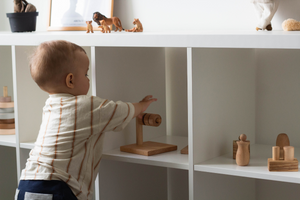
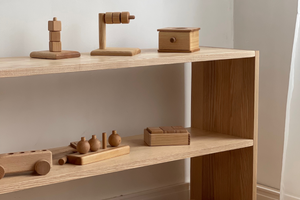
Set up a safe, open floor space with low furniture for your child. Instead of constantly carrying the toddler, keeping them in a stroller, or confining them to a playpen, give them the opportunity to walk and explore the room. Set up a low shelf where the child can independently choose and take a basket of items to explore.
Stage 2: From 18 to 24 Months — Refining Motor Skills and Daily Routines
This stage is often called the beginning of the golden age of "practical life exercises." The child begins to actively mimic the daily actions of adults. At the same time, there is a colossal leap in language development, known in neuroscience as the "language explosion."
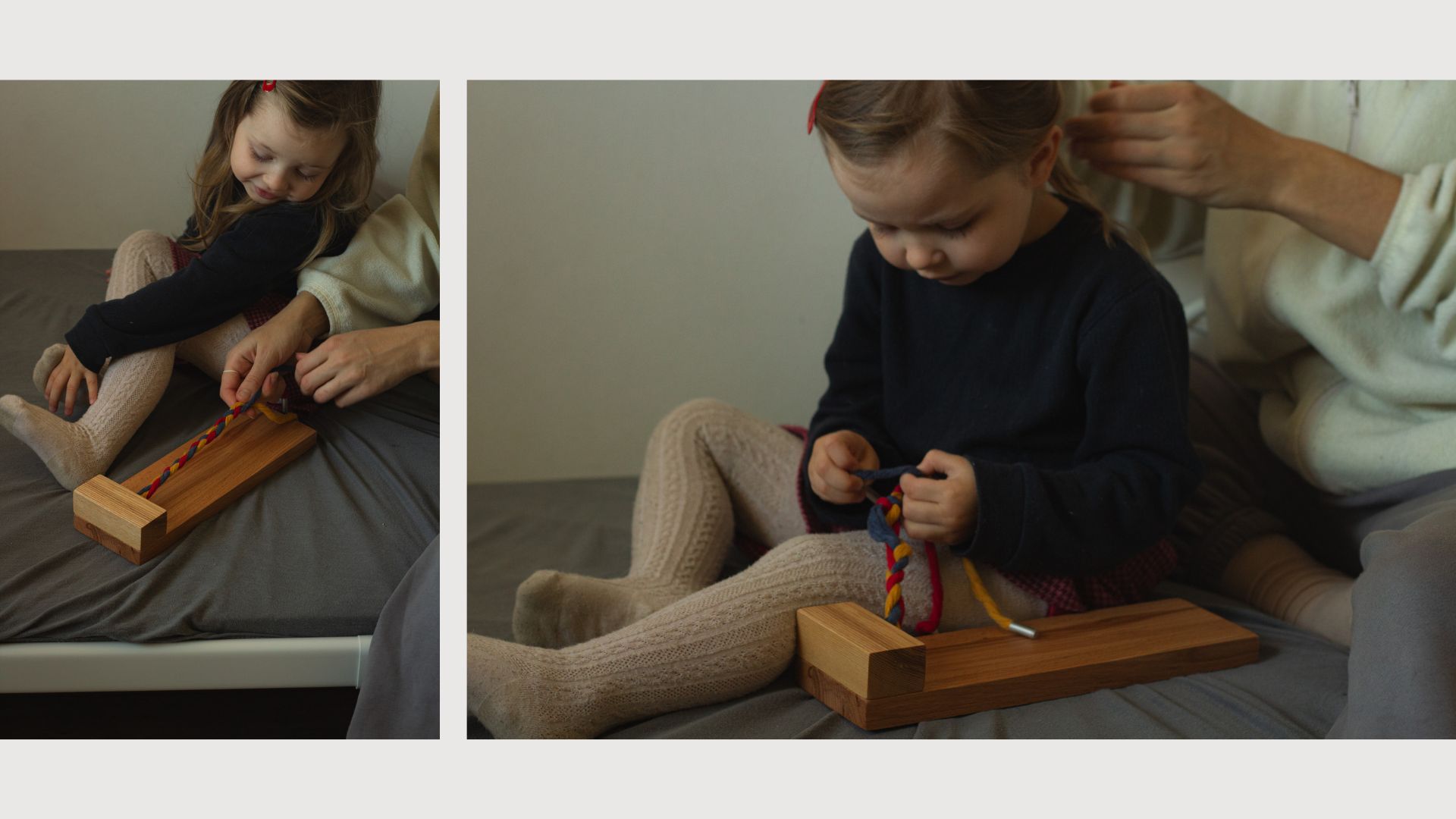
What is happening with the child:
-
The "language explosion": The toddler transitions from single-word sentences to rapidly building their vocabulary. Every day, their subconscious and absorbent mind absorb hundreds of new words, concepts, and grammatical structures.
-
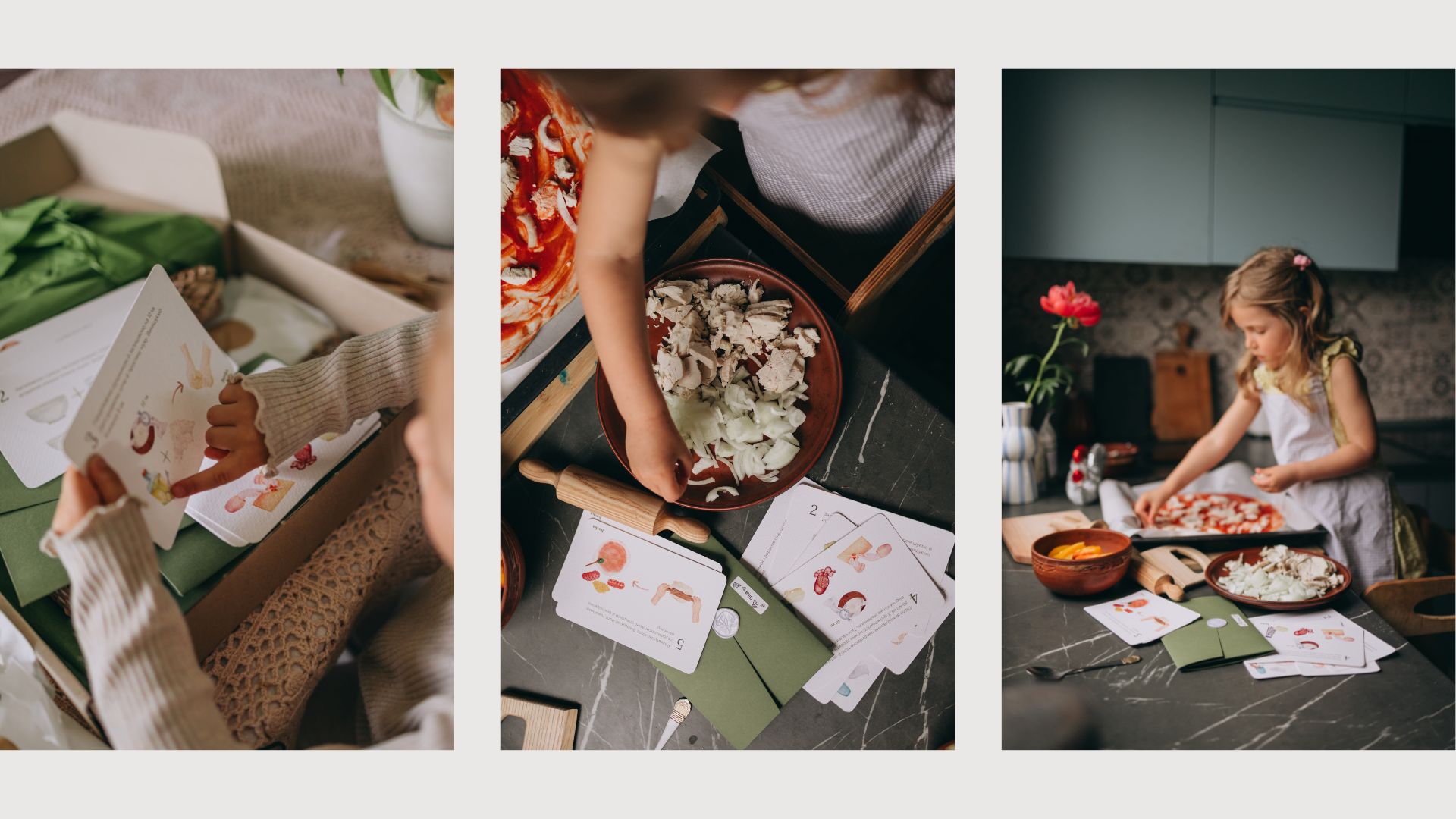
A drive for independence through daily life: The child is no longer interested in playing with plastic toy replicas of household items. They want to do real work with real objects and see the tangible results of their efforts.
-
Development of bilateral coordination: The child learns to use both hands with equal dexterity to perform complex, sequential actions (for example, holding a banana with one hand and peeling it with the other).
Home finds and materials:
-
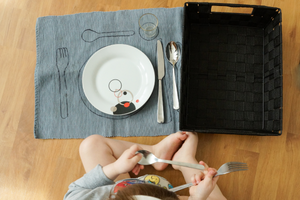
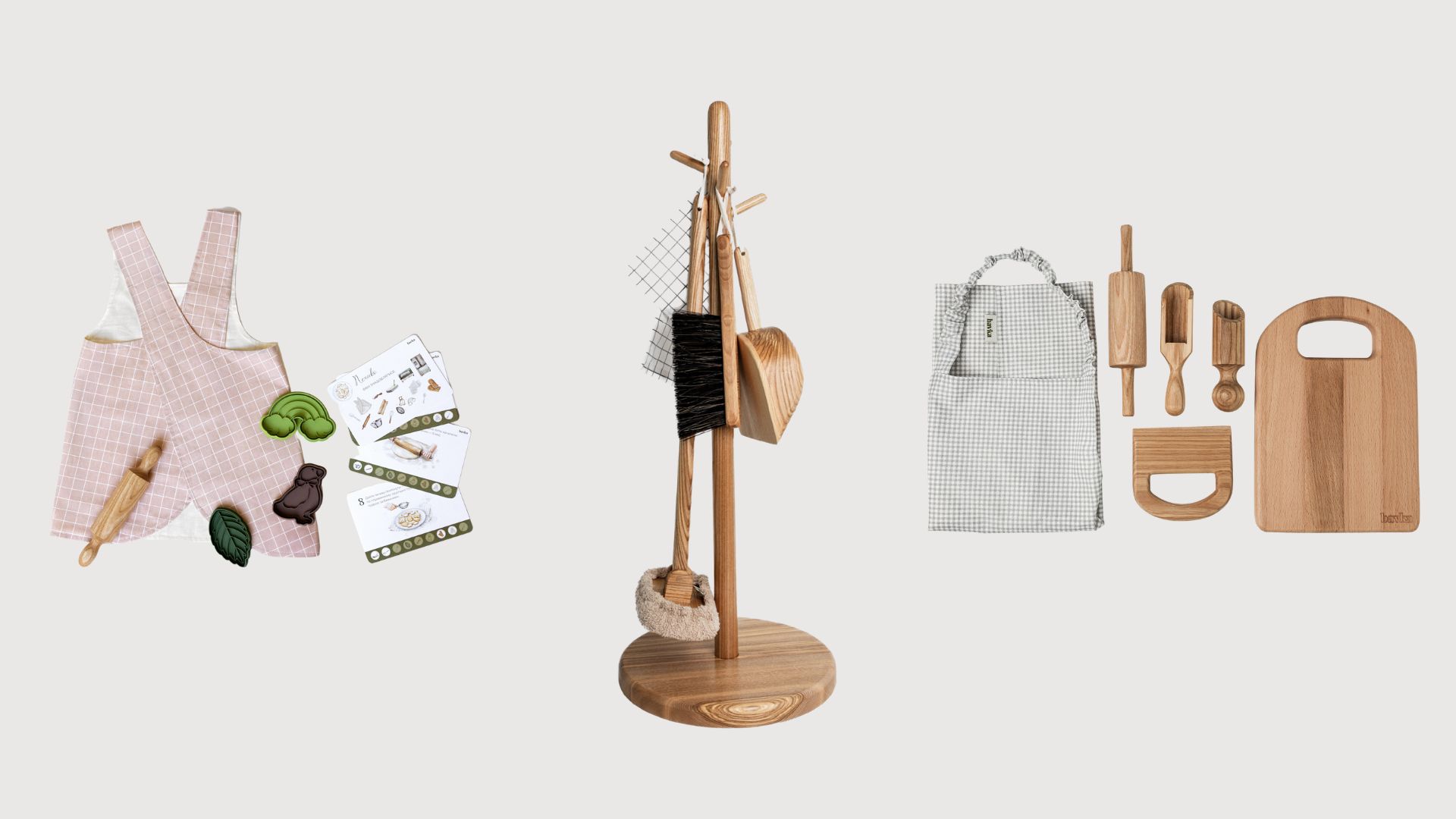
Child-sized real tools: A small, easy-to-use broom and dustpan, a small watering can for plants, or a tiny microfiber cloth for wiping dust or spills.
-
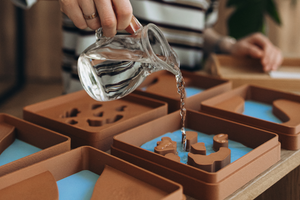
Materials for transferring and pouring exercises: Small pitchers for pouring water, spoons, and trays for transferring large grains or beans.
-
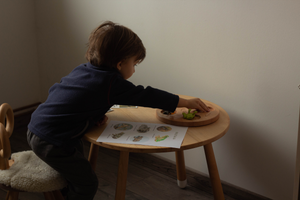
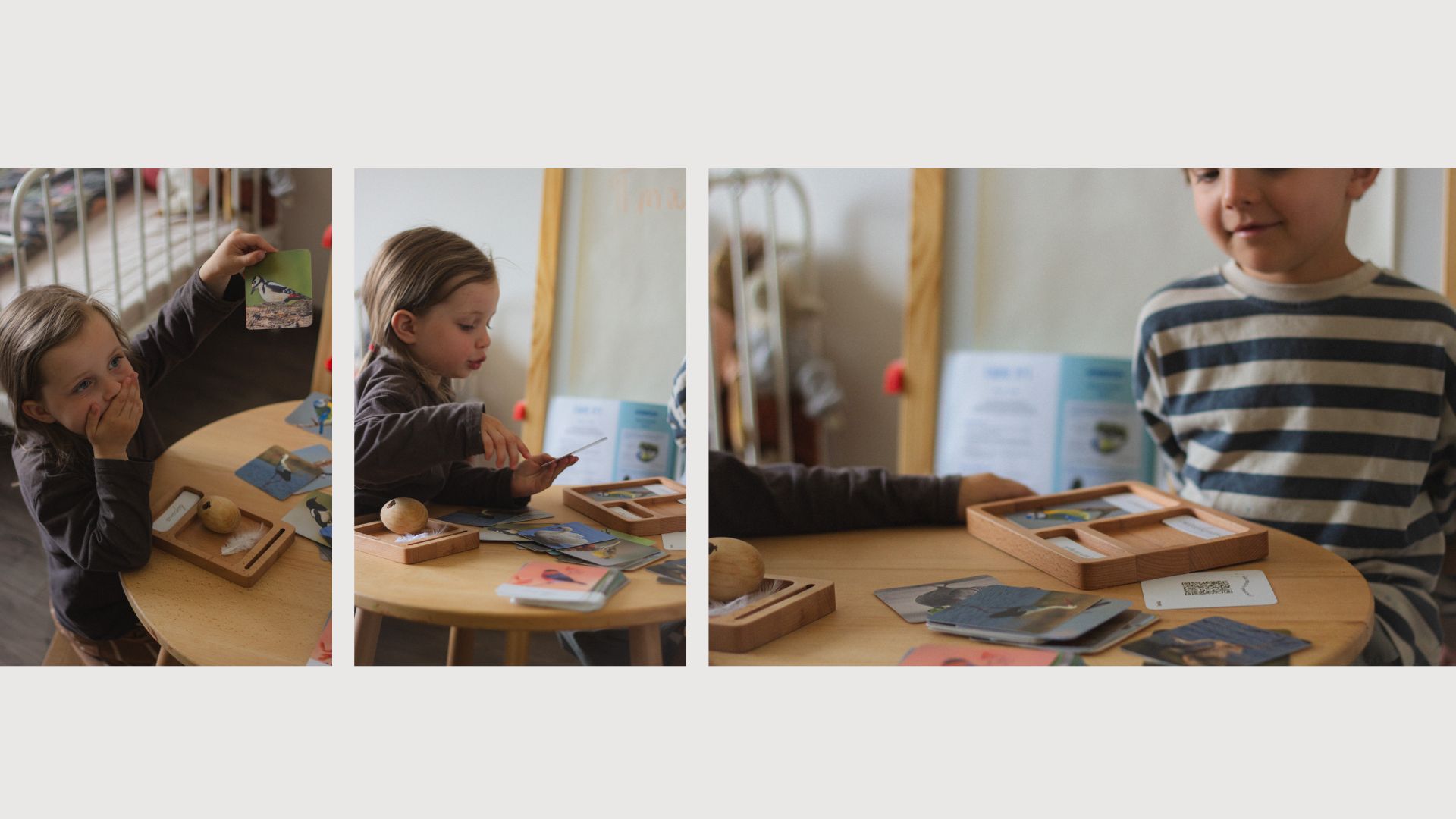
Vocabulary-building cards: Sets of realistic images categorized by theme (vegetables, fruits, farm animals, transport) for matching objects with pictures and encouraging language development.
Action step for home:
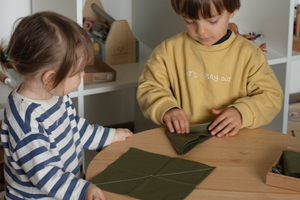
Involve your child in your daily routine. Set up a safe area in the kitchen or bathroom where the toddler, using a stable platform (like a learning tower), can independently wash an apple, peel a banana, or help you wipe down a table. Remember: the child's goal is not a perfectly clean table, but the process itself, through which they coordinate their movements and build internal order.
Stage 3: From 2 to 3 Years — Socialization, Logic, and the "I Can Do It" Crisis
The third year of life is a period of developing conscious will, taking the first deliberate steps in society, and actively structuring thought. The child finally begins to differentiate themselves from adults, which is often accompanied by an independence crisis and intense emotional reactions.
What is happening with the child:
-
Development of conscious will and self-control: The child learns to manage (inhibit) their impulses. This is a complex biological process tied to the maturation of the cerebral cortex (myelination). The toddler begins to understand cause-and-effect relationships, but their capacity for self-regulation is still very fragile.
-
A heightened sense of order: For a child of this age, external order (things in their places, a clear sequence of actions, and a set routine) is the foundation of internal peace and security. Disorder or unpredictability can trigger intense psychological conflict, which parents often perceive as unprovoked tantrums.
-
First interest in peers: The child makes their first attempts at interacting with other children, learning to take turns and respect someone else's space.
Home finds and materials:
-
Coordination and balance exercises: Walking on a line (drawn on the floor or marked with tape) while carrying objects, or "silence games," which are excellent for training self-control and willpower.
-
Materials with a control of error: Simple shape and color sorters where the pieces will not fit if a mistake is made. This allows the child to learn independently, without adult interference or criticism.
-
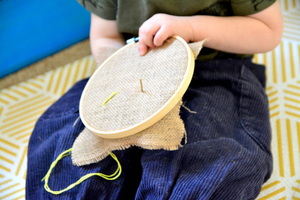
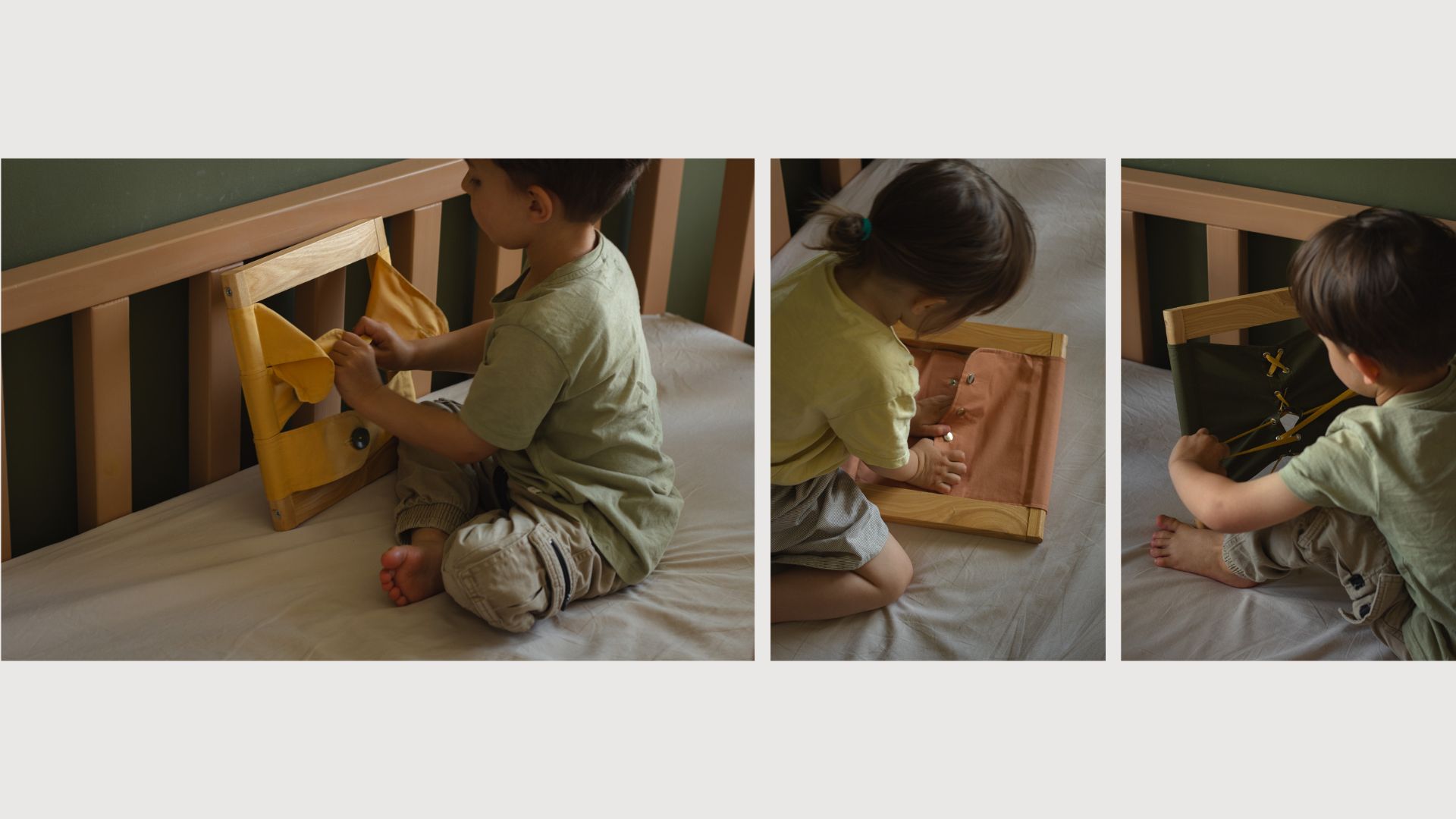
Dressing frames: Simplified frames with large buttons, snaps, or Velcro to practice independent dressing skills.
Action step for home:
Implement clear, simple rules of communication and "grace and courtesy" lessons. Instead of long lectures, use short, precise, and slow steps to show your child how to ask for help, how to close a door quietly, or how to wait until Mom or Dad is free.
A few fundamental points:
-
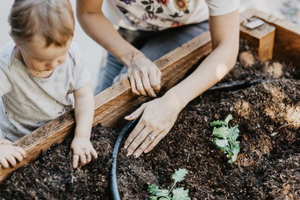
Do not try to create special, artificial activities. Simply allow your child to participate in your daily tasks (cooking, tidying up). This is the best practice for real life.
-
The most important factor is not the square footage of your home, but the accessibility of the items. Lower the shelves, keep only 4–5 materials accessible at a time, and put the rest away for rotation.
-
It is completely natural if your child does not show interest in a toy or activity the first time. They might not be ready, or their absorbent mind might currently be focused on a different sensitive period (for instance, language rather than sorting). Put the material away and offer it again in a few weeks.
The main principle remains unchanged: every unnecessary help from an adult is an obstacle to the natural development of the child. Our goal as parents is to be calm guides who, with respect and patience, help the toddler "do it myself."