Author: Alina Khoma
CEO of bavka, Montessori educator
The Three-Period Lesson is a highly effective way of presenting new information to your child in three consecutive stages. In Montessori classrooms, you will find countless thematic baskets filled with miniature objects and matching flashcards in the language area utilizing this method. As children reach preschool age, they are taught letter sounds, colors, and other academic concepts using this exact same approach.
The Three-Period Lesson was originally developed by Édouard Séguin, a 19th-century French physician who worked with special needs children in both France and the United States. He discovered innovative ways to boost children's cognitive abilities and believed deeply in fostering their autonomy and independence. Séguin’s written works became a massive inspiration for Maria Montessori and the source of many of her practical ideas.
.jpg)
The three steps, or periods, include:
-
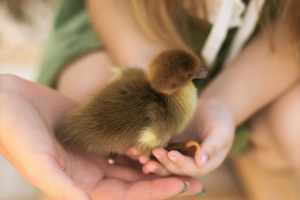
Naming (Introduction): "This is a duck."
-
Recognizing (Identification): "Show me the duck."
-
Remembering (Cognition): "What is this?"
.jpg)
It is highly likely that you have already naturally and logically taught your child things this way at home, without realizing that the approach has a specific structure, a name, and a rich history in educational pedagogy.
At home, our learning is much more informal. However, it is still incredibly helpful to understand the mechanics behind it. This vocabulary-building method is highly effective—not just in the classroom, but also at home, especially if you have chosen to guide your child's early education yourself.
Period 1: Naming (Introduction)
Show your child the object and name it clearly. For example, say, "Duck." Then, trace or handle the object, examine its details, and hand it to your child to explore sensorially. Keep it simple—just say, "This is a duck." At this stage, avoid talking about the sounds it makes or describing it with long, complex sentences. Focus solely on isolating the name.
Period 2: Recognizing (Identification)
This is the stage where the child learns to connect the spoken word with the physical object.
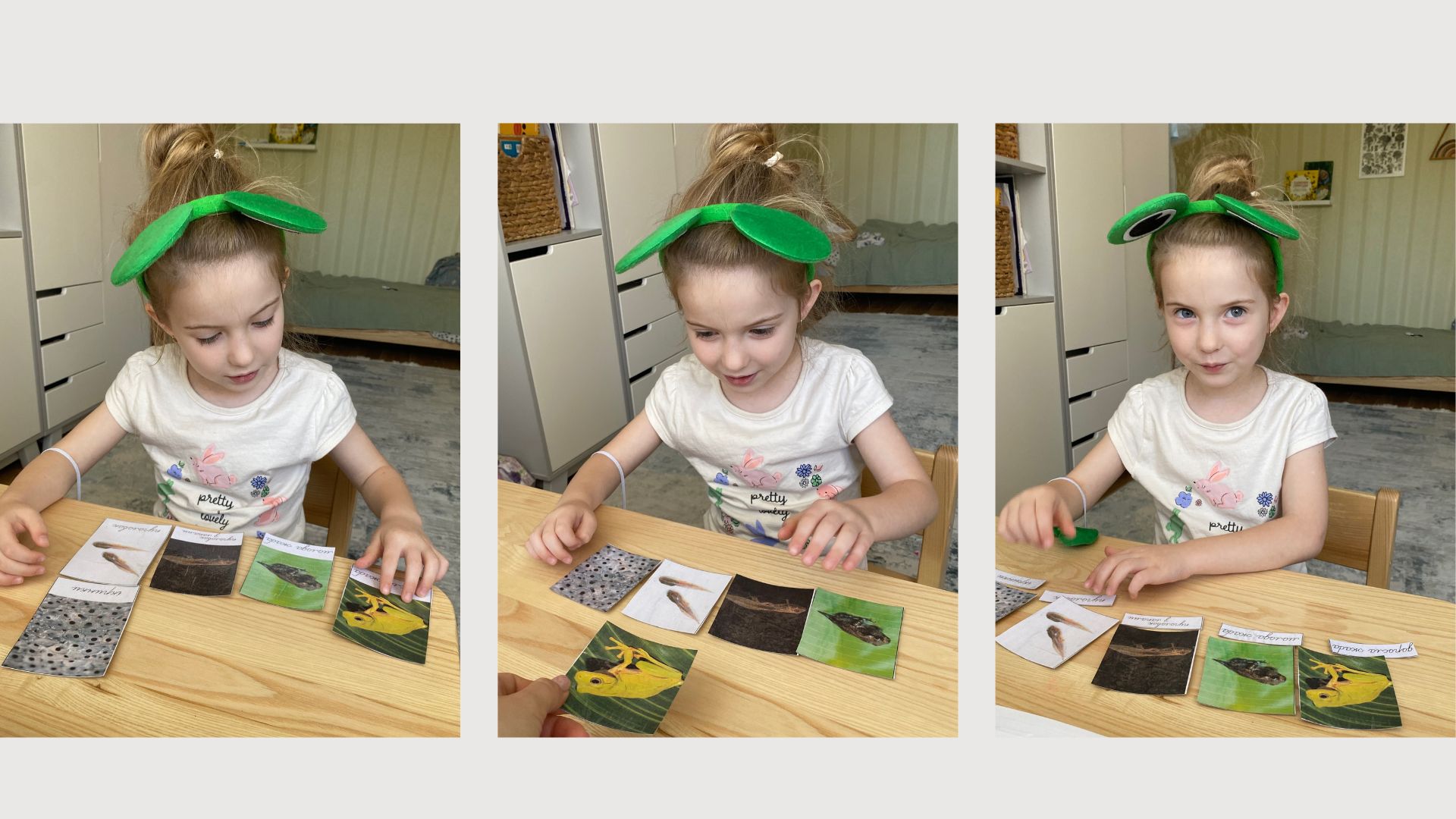
Ask inviting questions like: "Show me the duck," "Can you find the duck for me?" or "Look what I have. Let's find the picture with the duck."
With toddlers, using 3D models, realistic toys, replicas, or even real objects (like fruits, vegetables, household items, or even family pets!) works beautifully.
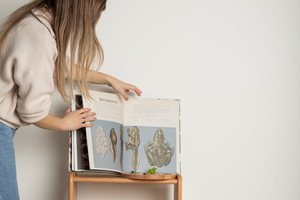
Maria Montessori emphasized the vital role of movement in learning, so try incorporating movement-based games here. For instance, ask your child to find the duck on the shelf and bring it to you. Games like hide-and-seek are also wonderful at this stage: "Where is the duck? There it is!"
Object-naming games are highly engaging for children, whether you're reading a book together ("Find it in the picture"), driving in the car, or playing "I Spy."
.jpg)
This period allows you to observe whether the child has fully absorbed the name, remembers it, and can differentiate it from other objects. It also helps you identify which words need more practice, signaling that it's time to gently return to the first period.
Enjoy watching how your child absorbs information about the world and recognizes objects. There is absolutely no need to rush to the third stage until your child has fully mastered the vocabulary at this second level. This process can take months, weeks, or just a few days.
Period 3: Remembering (Cognition) — "What is this?"
We generally skip this stage for children under three years old. The only exception is if your child is exceptionally talkative, speaks fluently, and you are entirely confident they can answer easily.
By bypassing this final step for toddlers, you prevent situations where they might feel put on the spot or make a mistake—which is crucial for keeping their natural motivation intact.
.jpg)
A Quick Note for Parents: Take a moment to reflect on how often you find yourself testing your little one. "What's this?" "What color is that?" I used to be guilty of this myself. I would ask my child to showcase their knowledge to family members and feel anxious if they forgot or got it wrong. Truthfully, this makes learning feel more like a staged performance than a natural process of growth. It subtly teaches children that they are doing it to please us or to receive praise, rather than for the joy of discovery.
Remember, at this stage, children are genuinely captivated by the process itself. The inner realization that they remembered something delivers a wonderful rush of dopamine and internal satisfaction. We shouldn't disrupt this natural development of intrinsic motivation with unnecessary external pressures.
.jpg)
What to Do If Your Child Makes a Mistake
If your child misidentifies an object, it is simply a sign that they need more time with the previous stage, and you should gently circle back.
The best response to an error is a simple statement of fact: "This is a duck, and this is a goose." Avoid correcting them directly or saying things like, "That's wrong," or "No, that's not a duck." Instead, just return to the recognition games of Period 2 at a later time.
.jpg)
When to Use the Three-Period Lesson
-
Introducing new vocabulary during thematic activities (e.g., names of clothing, fruits, flowers, animals, or household items).
-
When a child regularly confuses two terms (like a square and a rectangle).
-
When introducing advanced nomenclature (e.g., specific animal breeds, plant types, historical figures, professions, body parts, emotions, or continents).
Bringing it into Practice: Three-Part Cards
Adults frequently use specialized flashcards during this type of vocabulary learning. Three-part cards — often called nomenclature cards — are widely used in the Montessori method as an effective way to enrich a child's vocabulary and prepare them for reading.
They consist of three distinct components:
-
The Picture Card: Shows a clear, isolated image of the object or concept.
-
The Label Card: Features the printed name of that object or concept.
-
The Control Card: Displays both the image and the text together on a single card, allowing the child to independently check their own work and self-correct.
.png)
These cards help children develop language skills, practice reading, and expand their knowledge of the world around them.
When paired correctly with a rich foundation of real-world experiences and prior learning (such as phonetic games, sandpaper letters, and the movable alphabet), a child can transition to reading incredibly fluidly.
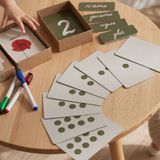
In our current collection, you can find these three-part cards included in our Numbers Set. We also include them in almost every one of our educational and thematic workbooks.
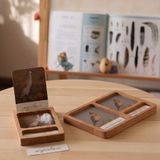
To make this learning process as seamless and aesthetically pleasing as possible at home, we have designed a complete ecosystem for Three-Period Lessons at bavka. Our collection offers a rich variety of thematic nomenclature cards tailored to your child’s evolving interests—ranging from instant, budget-friendly PDF sets ready for printing ("Farm", "Seasons", "Tools", and "Human" as seen) to beautifully crafted physical card sets ("Birds of Ukraine" on and "Planets of the Solar System" ).
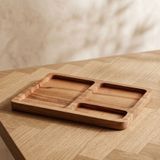
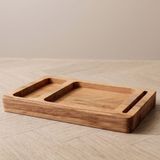
To empower your child to guide their own learning independently, we also created a specialized wooden tray organizer crafted from premium solid beechwood. It features three dedicated, ergonomic slots designed to perfectly hold the control card, the picture card, and the word label. This thoughtful tool allows your little one to structure their workspace beautifully, isolating the academic challenge while removing unnecessary visual noise — turning early reading and vocabulary practice into a calm, joyful ritual.
.jpg)
To learn more about the specific ways to use these cards at home, check out our previous post!
.png)