Author: Alina Khoma
CEO of bavka, Montessori educator
The time that wise nature has set aside for the development of specific skills in children is called a sensitive period.
This is a special window of time when a child is uniquely receptive to absorbing particular skills. Sensitive periods occur in every child, regardless of gender, race, social status, or place of residence. However, this period begins at a different time for each individual child, and it can only be recognized through careful observation.
Nevertheless, there are approximate age frames during which these periods occur. Their duration varies for each toddler. They cannot be artificially activated, prolonged, or paused.
It is believed that during a sensitive period, a child absorbs the necessary knowledge completely effortlessly and naturally. Once the period ends, developing any of these skills will require conscious, deliberate effort.
In her works, Maria Montessori identified 6 primary sensitive periods:
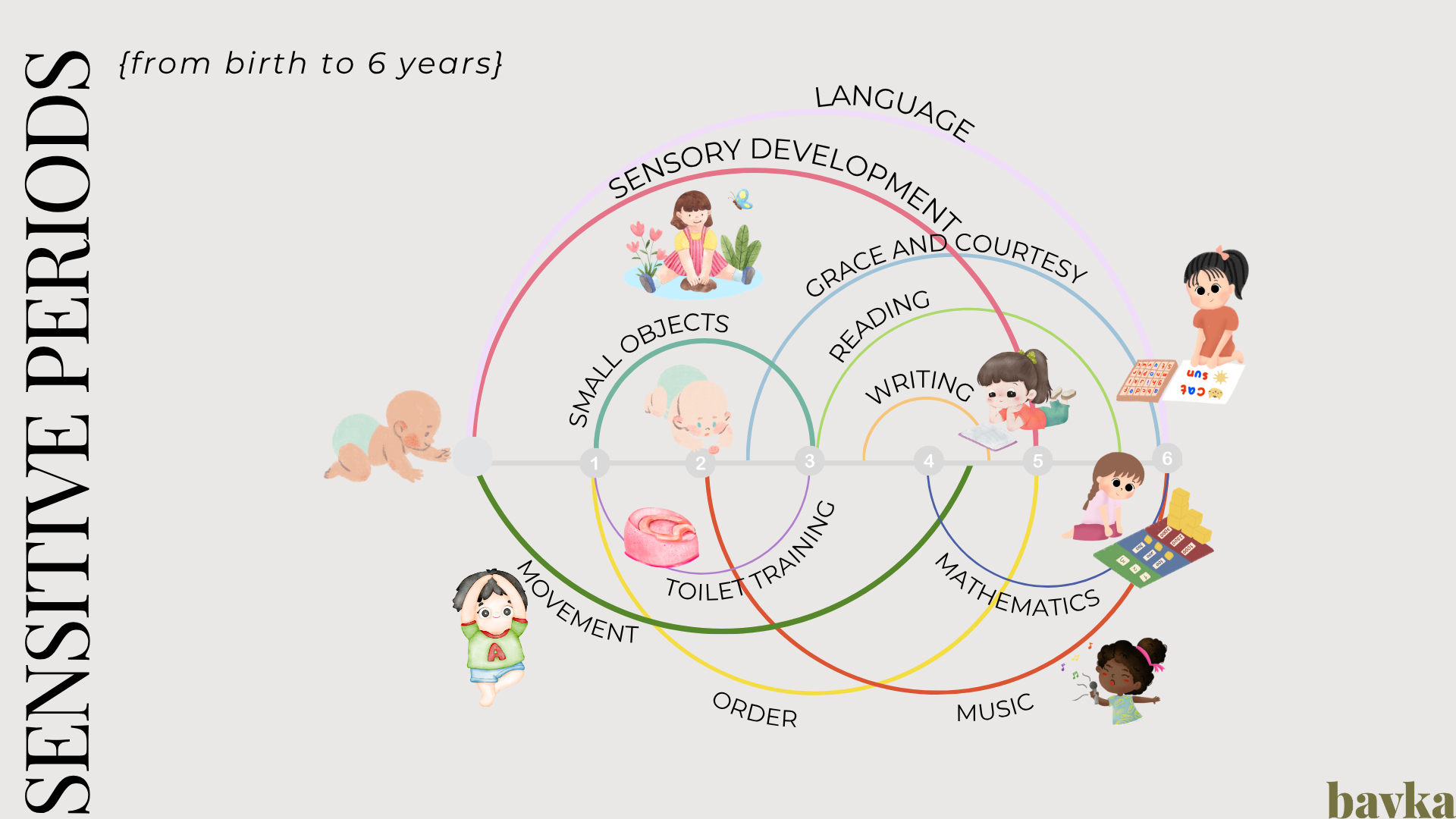
The 6 Sensitive Periods
1. The Sensitive Period for Order
-
Age: 0–3 years
A child's inner nature simply cannot tolerate chaos:
-
In the environment: A need for order in the home.
-
In time: A need to follow a consistent daily routine.
-
In relationships: Adult expectations that are always clear, understandable, and consistent.
Consequences of ignoring this period: Carelessness, untidiness, lack of an "internal clock," and irresponsibility.

3. The Period of Perceiving Small Objects (The Micro-world)
-
Age: 1.5–5.5 years
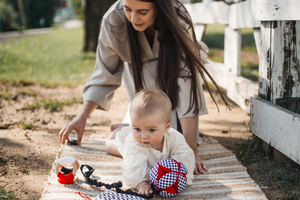
This is often the most anxious period for parents, and it is one that absolutely no one will miss. The child develops a boundless interest in the micro-world. Everything that is tiny, small, and can be stuffed into the mouth completely fascinates them.
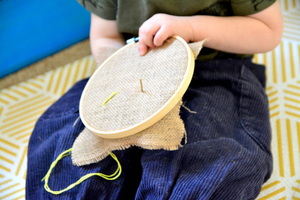
During this period, it is vital to let the child explore their environment safely. This isn't just about "playing with tiny objects." At this stage, you can engage the toddler in breaking down a whole into parts—such as threading beads or any kind of lacing games.
Consequences of ignoring this period: A lack of cognitive interest, no desire to explore the world, and a lack of interest in creative activities.

4. The Period of Social Skills Development (Culture)
-
Age: 2.5–6 years
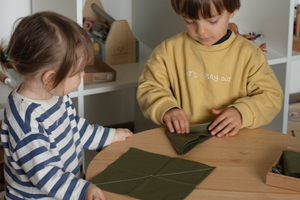
Forms of polite behavior become accessible and interesting to the child. Getting to know the ethical norms of society provides them with the opportunity to successfully adapt to a cultural social environment. Parents simply must know about this phase to notice it in time and utilize it to the child's maximum benefit.
Consequences of ignoring this period: Conscious violation of social norms and the adoption of false moral principles—ranging from outright disrespect to aggression toward others.
5. The Period of Movement and Action Development
-
Age: 1–4 years
A highly critical period for strengthening not only physical health but also mental capacity. Natural development is impossible without oxygenating the blood and nourishing brain cells. The lungs' capacity to take in oxygen directly depends on the child's physical activity.
Consequences of ignoring this period: A sedentary lifestyle, lack of interest in sports, general physical weakness, poorly developed gross motor skills, and clumsiness.

6. The Period of Language Development
-
Age: 0–6 years
-
Up to 6 months: The child listens closely to their parents' speech and tries to imitate it with babbling.
-
Around 1 year: They pronounce their first words.
-
At 1.5 years: They can clearly express a specific desire.
-
At 2–3 years: The child can already use words to explain their actions and behavior.
-
At 3.5 years: They feel the power of language and learn to resolve problems using it. At this age, they also show a keen interest in letters.
-
At 4 years: They become capable of writing.
-
At 5 years: They can already read.
Consequences of ignoring this period: Difficulties in communication, trouble establishing social contacts, learning difficulties, and complexities in raising their own future children.
The uniqueness of the developmental environment created using the Maria Montessori method is that it allows the toddler to live out all their personal, unique sensitive periods with maximum benefit.

How to Support Your Child Without Missing These "Windows of Development"
Movement Development
An active desire to develop manifests through movement and spontaneous attempts to master the body and strengthen the muscles of the arms and legs. Maria Montessori asserted that during movement and the accompanying ventilation of the lungs, blood oxygenation occurs. This oxygen travels directly to those brain cells involved in the development of all mental functions.
Therefore, any educational measures or parenting methods that restrict a child's freedom of movement during this period are, without exaggeration, a crime against natural child development.
Consider how harmful a sedentary lifestyle is for a child, even at home. Children sit politely during lessons (meaning: reading without moving), sit politely at home in front of cartoons, sit politely in strollers during walks, sit politely while mom feeds them—and on top of that, they sleep politely. When do they actually move, and therefore develop?
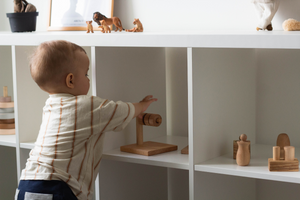
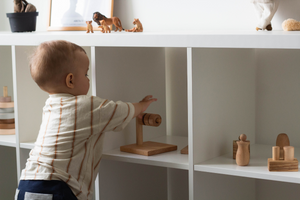
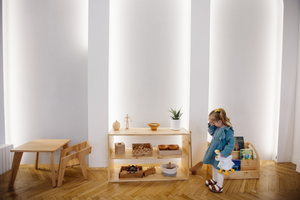
If you look at a Montessori classroom, everything is beautifully organized, leaving plenty of room for movement. You will notice that shelves with materials are located far from the actual workspace. Thus, a child must walk a certain path to pick up a material, carry it to the workspace, and bring it back. The materials themselves account for the child's need for movement.
Activities to support movement from birth:
-
Plentiful physical contact with parents
-
Infant massage
-
Exercises on a fitball (exercise ball)
-
Sensory paths and textured mats
-
Swimming and active bathing
-
Tummy time
-
Using low floor beds (instead of caged cribs)
-
Active walks and indoor climbing frames (like Pikler triangles)
-
Toys that inherently stimulate motor activity

The Period for Order
Maria Montessori claimed that children exhibit a true passion for familiar order and routine. It might look to you like children are creating chaos and throwing everything around, but that's not true! Through these actions, they are showing that they desperately need order. Unfortunately, without help, a child cannot cope on their own. The parents' job is to help establish and maintain this orderly environment.
Active Sensory Development
During this phase, the child becomes particularly sensitive to shapes, sizes, colors, smells, sounds, and tastes. Two simple tips will help your child during this time:
-
Provide a rich environment for all five senses: Let the baby out of your arms, ensure plenty of comfortable floor time, and let them walk barefoot on the grass. The more experience a child has with different textures, the better. Let them feel warm and cold items, hard and soft, wet and dry. Walk on pebbles and splash in water. Stroll through the forest collecting pinecones, acorns, and chestnuts. Introduce a variety of foods, smell spices and flowers, listen to birds singing or classical music, and hug them frequently!
-
Give the child time to freely explore at their own pace: This is about slowing down. Very often, adults are in a rush. Walks have become an opportunity to run errands rather than explore the world. Stop! Think about what your child needs right now. Maybe they want to look closely at an ant, or reach for a leaf. Do not rush them. The most important years of a child's life often slip away in the race to "do it all." You cannot bring this period back. Ensure you don't regret a lost opportunity to relax and take a peaceful walk with your child later.

Perceiving Small Objects
This is the ideal time to introduce:
-
Lacing toys (allowing the child to string beads and build a whole out of parts)
-
Building blocks and Lego
-
Puzzles and mosaics
-
Sorting activities (using grains, beans, or natural materials)
-
Dry pouring or transferring grains with spoons
Active Language Development
-
At 2 months: The muscles of the speech apparatus are developed enough to pronounce vowel sounds. It's fascinating to watch a baby stare intently at your mouth when a sound comes out. This shows they hear you and are processing speech.
-
At 5 months: Babies can combine a consonant with a vowel and begin to imitate certain sounds, working hard to train their vocal apparatus.
-
Up to 1 year: You will hear syllables and sound clusters, leading into their very first words.
-
From 1.5 to 2 years: The child undergoes a "vocabulary explosion" that coincides with active brain development. They can now express feelings or emotions and are naturally absorbing the grammatical norms of language.
-
At 2–2.5 years: Children often talk to themselves out loud during play. If you listen closely, you will hear exactly what your child is thinking. Soon, these monologues will turn into internal thoughts. Over the next few years, a child can memorize a new word every two hours of active time.
-
At 3–4 years: Speech becomes entirely conscious. This is when children become interested in letters as symbols of sounds. This is why teaching a child to read and write before this age makes little sense; while they can memorize it mechanically, it is an age-inappropriate burden. At age three or four, it stems from a genuine, joyful desire.
-
At 4.5–5 years: The child becomes fully capable of reading consciously and for pleasure.
Essential Tips for Language Development:
-
Talk to your child constantly.
-
Speak slowly, clearly, and use proper, grammatically correct language (avoid baby talk).
-
Maintain physical contact, as it directly supports language development.
-
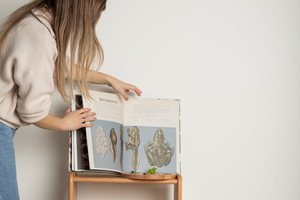
Read and look through books together daily.
-
Describe the surrounding space and call objects by their real, accurate names.
-
Enrich your toddler's vocabulary with interesting, descriptive words.
-
Encourage your little one to express themselves — do not try to guess what they want before they have made an attempt to explain it to you.
Trusting the Natural Rhythm of Childhood
Sensitive periods are beautiful, fleeting windows of opportunity designed by nature. As parents, our mission isn't to force development, drill skills, or rush our children through milestones. Instead, our true role is to become keen observers and mindful creators of their environment.
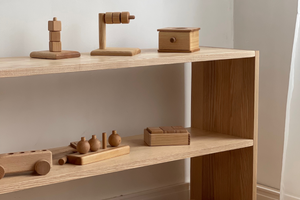
By setting up simple, accessible spaces—whether it's a small cleaning corner, a low toy shelf, or a safe spot for sensory exploration—we provide our children with the exact tools they need to master their world. When we step back, slow down, and trust their inner drive, we achieve something much greater than just teaching them to clean or speak. We are helping them build deep-seated confidence, genuine independence, and a lifelong love for learning.
So, take a deep breath, observe what your little one is drawn to today, and let nature do its beautiful work!